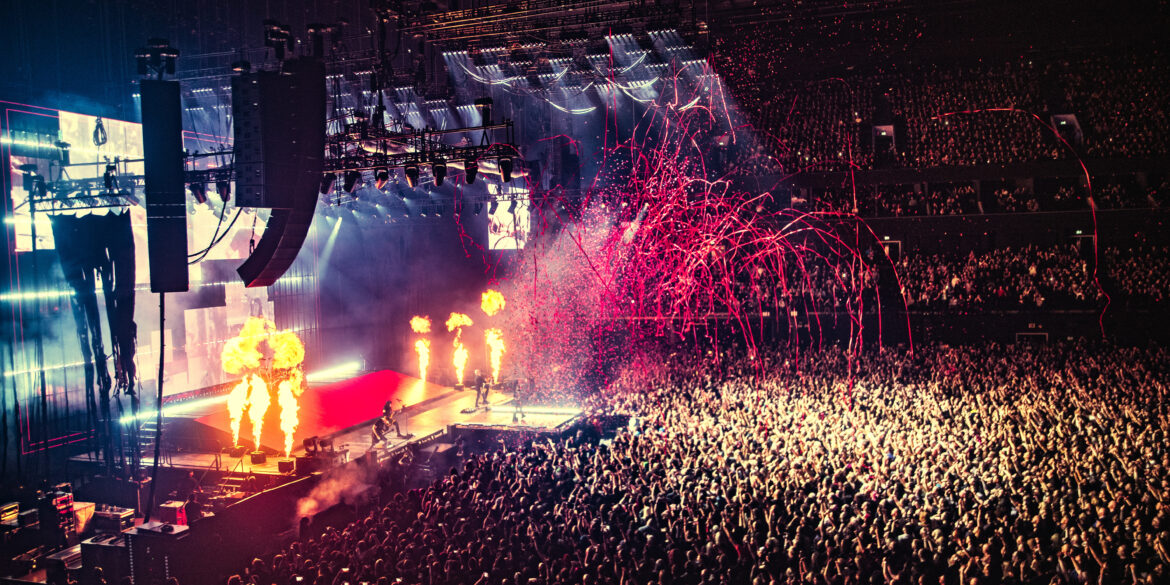
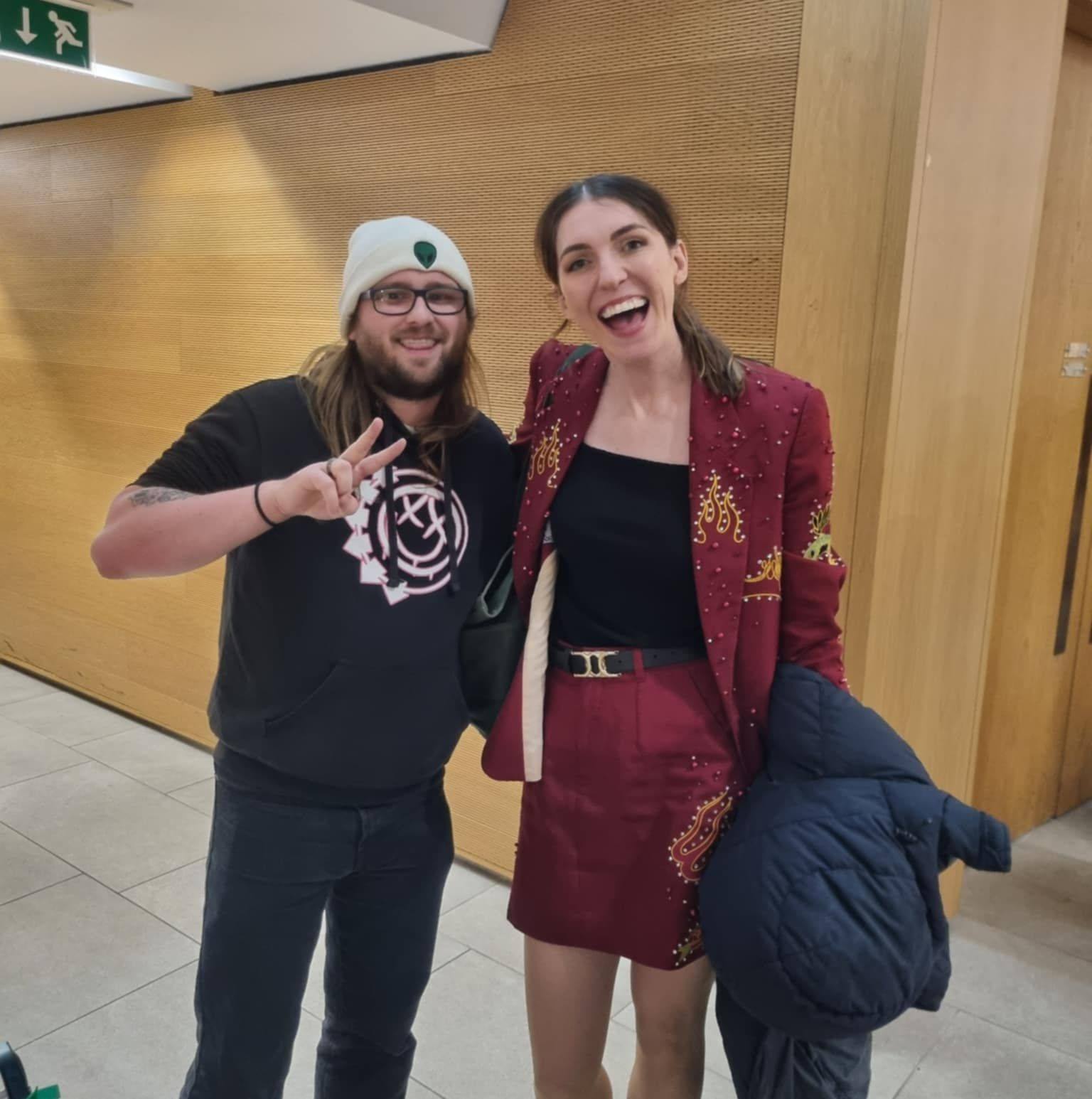
There are some bands you spend years waiting to see live. Not necessarily because they are the biggest names in the world, or because they are constantly appearing at the top of festival bills, but because their music has somehow followed you through enough different stages of life that eventually seeing them onstage feels less like attending a gig and more like ticking something off a personal list.
Breaking Benjamin have always been one of those bands for me.
Their music belongs to a particular strain of American alternative rock that seemed almost inescapable during the 2000s and early 2010s. Huge riffs, enormous choruses, darker lyrics and just enough melody to make every song feel like it belonged on the soundtrack to some formative teenage memory. They were never quite the biggest band in Britain, but for those who discovered them, they became one of those names that stayed around.
On July 16th at Manchester’s O2 Victoria Warehouse, that long-awaited opportunity finally arrived.
Breaking Benjamin had brought their co-headline tour to the UK alongside Chevelle, another band whose place in the alternative rock landscape has always felt considerably larger than their British profile might suggest. With Return To Dust opening the evening, the bill offered three very different takes on heavy, melodic rock, gradually building from promising newcomers into two American bands with decades of material between them.
And for the most part, it delivered exactly what you would hope from a night like this.
The evening began with Return To Dust.
Being the opening band on a bill of this scale is never an easy position. The audience are still filtering into the venue, conversations are still taking place, drinks are being collected and, more often than not, a sizeable portion of the room has not yet arrived. There is only so much an emerging band can realistically do under those circumstances.
Return To Dust handled it well.
They were a nice little opener in every sense of the phrase, setting the tone without attempting to overwhelm the room before the main event had even begun. There was enough weight to their sound to make it immediately apparent why they had been chosen for the tour, while still retaining the feeling of a band building its reputation one room at a time.
The audience response grew gradually as the set progressed.
That is perhaps the best measure of success for an opening act. You do not necessarily need thousands of people screaming every word back at you. You simply need to leave the stage with more people paying attention than when you walked onto it.
Return To Dust managed exactly that.
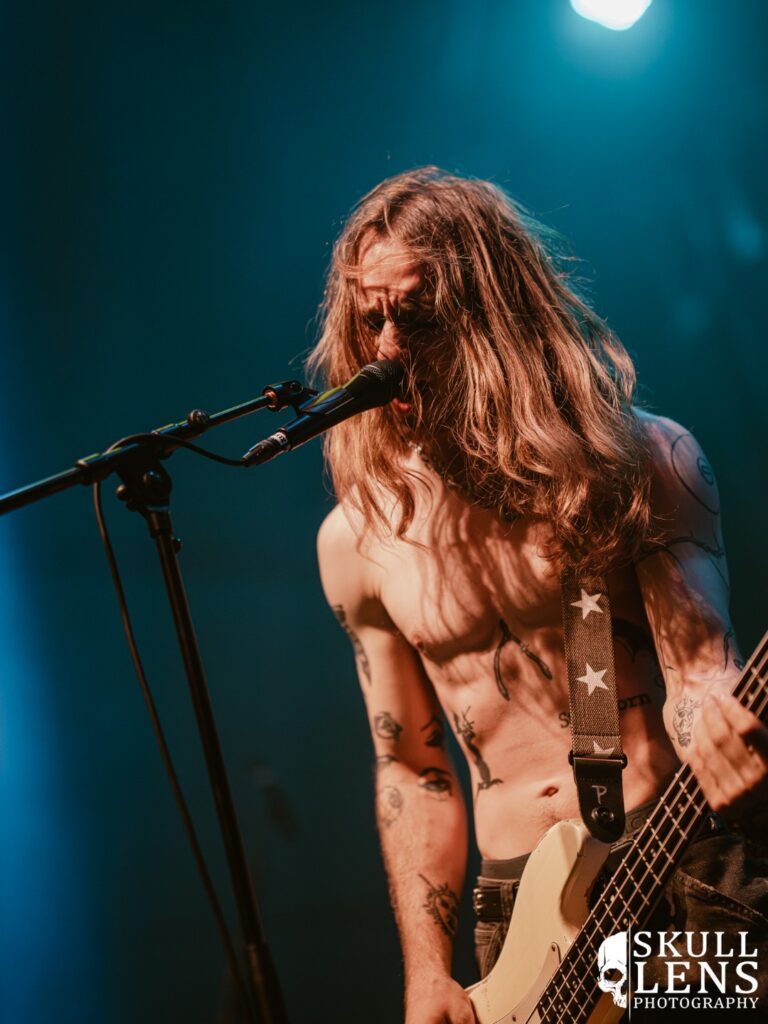
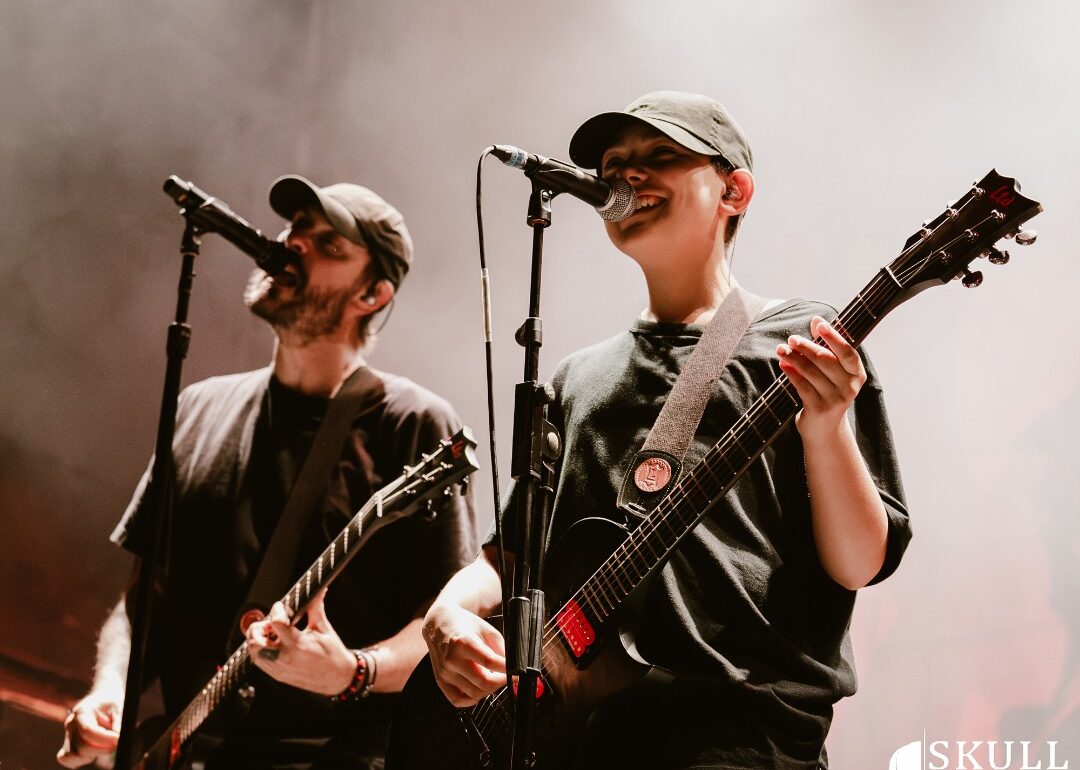
Skulls Lens Photography – Return To Dust
By the time their set concluded, there was a genuine sense that they had made a name for themselves before an audience who may not have arrived knowing much about them. They were not simply filling time before the headline acts appeared.
They had earned their place on the bill.
And then came Chevelle.
From the moment the lights dropped, the difference was immediately obvious.
Chevelle did not walk onto that stage looking like a band content to play second fiddle.
They looked hungry.
Perhaps that was the most striking thing about their performance. For a band with more than two decades of experience behind them, there was absolutely no sense of going through the motions. They played with the intensity of a group who had something to prove, attacking the set with such ferocity that it occasionally felt like watching a completely new band discovering just how powerful they could be live.
The opening stretch was relentless.
“An Island” and “Face to the Floor” immediately established the mood, combining the weight and atmosphere that has always defined Chevelle with the kind of enormous hooks that make their music so effective in a live setting. The guitars sounded huge inside the Victoria Warehouse, while the rhythm section provided the sort of physical punch that makes this music feel considerably more powerful when experienced alongside hundreds of other people.
Then came “Self Destructor”.
And suddenly the room was properly alive.
Chevelle have always been a band capable of sitting somewhere between alternative rock and something considerably heavier, and that balance was on full display throughout the set. They never became so aggressive that the melodies disappeared, but neither did they allow the more accessible elements of their music to soften the impact.
It was heavy without becoming exhausting.
Melodic without becoming safe.
And most importantly, it felt alive.
“Family System” pushed that intensity further still, before “Send the Pain Below” brought one of the first truly enormous reactions of the evening.
There is something particularly satisfying about watching a band finally play the songs you have spent years imagining hearing live.
“Send the Pain Below” is exactly the kind of track that can sound almost deceptively straightforward on record, yet inside a packed venue it becomes something else entirely. The opening familiarity immediately brought recognition from the crowd, but as the song developed, the audience seemed to realise just how much power Chevelle could wring from it.
The response was huge.
And then came “The Red”.
This was the moment where Chevelle demonstrated just how effortlessly they could command the room.
The song remains one of their defining pieces of music, built around a riff that seems almost designed to be played at enormous volume. When it arrived, the audience reaction was immediate. Heads moved, voices rose, and the entire venue seemed to lock into the rhythm.
It was the kind of performance that makes you question why Chevelle have never achieved greater recognition in the UK.
They have the songs.
They have the musicianship.
They certainly have the stage presence.
More importantly, they have the sort of back catalogue that should make them a natural fit for rooms much larger than this one.
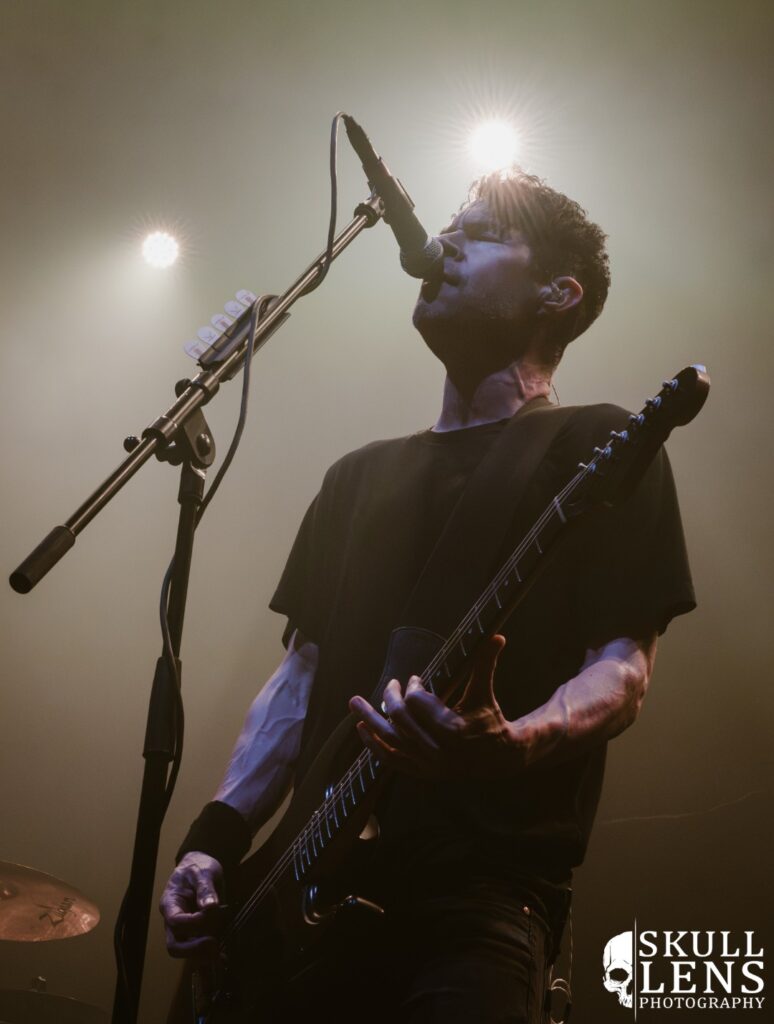
Skull Lens Photography – Chevelle
“Comfortable Liar” brought another huge reaction, while “Mars Simula” provided the perfect final statement. By the time Chevelle left the stage, the audience were already fully warmed up for what came next.
But rather than simply preparing the room for Breaking Benjamin, they had managed to make their own performance feel like a headline set.
That is no small achievement.
Chevelle were on fire.
They played like a band who had somehow rediscovered the thrill of being new, throwing themselves into songs with an energy that never felt forced. The setlist was concise, packed with exactly the material people wanted to hear and structured in a way that never allowed momentum to disappear.
There was no excess.
No unnecessary detours.
Just song after song demonstrating exactly why Chevelle have maintained such a devoted following for so long.
And then the lights came back down.
For me, this was the moment the night became particularly special.
Breaking Benjamin have been a bucket-list band for years.
There are certain artists whose music becomes so tied to a particular period of your life that eventually hearing those songs performed live feels almost surreal. You know every riff. You know the choruses. You know exactly where the biggest moments are supposed to arrive.
The only question is whether the band can live up to the version of them that exists in your head.
Breaking Benjamin mostly did.
From the opening notes of “I Will Not Bow”, the scale of the performance was immediately apparent. This was not simply a band arriving to play a collection of nostalgic favourites. There was real weight behind the production, and the sound inside the Victoria Warehouse gave the guitars the sort of enormous presence they demand.
“Until the End” and “Evil Angel” followed, and suddenly the room was being transported backwards through years of alternative rock history.
That was the great pleasure of the evening.
Breaking Benjamin have a catalogue filled with songs that feel instantly recognisable without necessarily having become part of the British mainstream in the way some of their contemporaries did. For the people standing inside the venue, however, none of that seemed to matter.
These songs mattered to them.
And that became increasingly obvious as the set progressed.
“Crawl” hit with a particularly satisfying heaviness, its opening moments immediately drawing one of the biggest responses of the early set. “Red Cold River” followed with a more modern edge, proving that the band’s appeal has never been entirely dependent on nostalgia.
That is important.
A band cannot survive for decades simply by asking people to remember what they used to be.
There has to be something in the present.
Breaking Benjamin still have it.
“Blow Me Away” was another obvious highlight, carrying with it the kind of immediate recognition that only comes from a song having lived in people’s heads for years. The audience reaction was enormous, and watching people around the venue sing along to material that has never quite received the same level of mainstream attention in Britain was a reminder of just how deeply this band has connected with its fanbase.
Then came “Follow”.
And suddenly the nostalgia became impossible to ignore.
There was something wonderfully strange about hearing these songs in a room full of adults who had clearly grown up alongside them. Some had probably discovered Breaking Benjamin as teenagers, others perhaps during university, while some may have arrived at the band much later.
Yet everyone seemed to have their own relationship with the music.
That is the strange power of nostalgia when it is done properly.
It is not really about remembering the past.
It is about realising that the past has followed you further than you expected.
“Angels Fall” and “You” continued the run of songs that demonstrated just how broad the band’s catalogue has become, before “So Cold” arrived and brought one of the most recognisable moments of the night.
The opening of that song still carries an almost immediate emotional response.
There was no need for elaborate stage tricks or lengthy introductions.
The music did the work.
The same could be said of “Polyamorous”, which felt like a particularly welcome reminder of the band’s earlier identity. There was a rawness to it that contrasted nicely with some of the more polished later material, and hearing it performed alongside songs from across the band’s career helped demonstrate just how much ground Breaking Benjamin have covered.
Then came “Dear Agony”.
This was where the evening slowed down slightly, and it was a welcome change of pace.
Breaking Benjamin’s greatest strength has always been their understanding of contrast. They can build enormous walls of sound, but those moments only work because they understand when to pull back. “Dear Agony” provided that breathing space before the set gradually began building towards its final stretch.
“Something Wicked” and “Breath” brought the volume straight back up.
“Breath” in particular was one of those moments where the entire venue seemed to understand exactly what was coming before the song had properly begun. The reaction was enormous, and for a while the Victoria Warehouse became less like a concert venue and more like one giant communal singalong.
It was also around this point that the length of the set began to become slightly noticeable.
Breaking Benjamin had a considerably longer set than Chevelle, and while there was more than enough material to justify it, there were moments where the audience seemed to drift ever so slightly. This was never a major problem, and certainly never enough to undermine the show, but the difference was noticeable when looking further back through the room.
Closer to the stage, however, there was no such issue.
Those at the front remained completely locked in from beginning to end.
The further back you went, the more occasional conversations and trips to the bar began to appear during some of the less instantly recognisable moments.
It is hardly a criticism.
When a band has been around for this long and has a catalogue as extensive as Breaking Benjamin, there will inevitably be songs that resonate more strongly with some sections of an audience than others.
If anything, it was a testament to the strength of the biggest songs that whenever one arrived, the room immediately snapped back into focus.
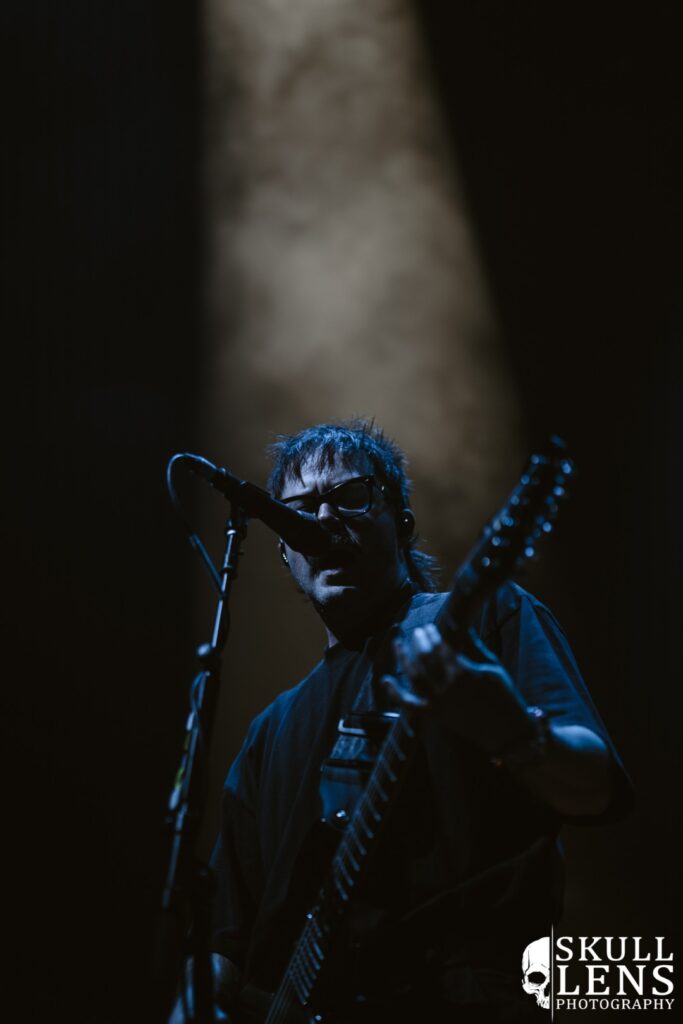
Skull Lens Photography – Breaking Benjamin
“Failure” was one such moment.
The song carried an enormous weight live, balancing melancholy with the sort of towering chorus that Breaking Benjamin have perfected throughout their career. “Dance With the Devil” followed, providing another reminder of just how much emotional darkness exists beneath the band’s enormous melodies.
By this point, however, everyone knew what was coming.
There was only one way this night could end.
The opening of “The Diary of Jane” hit and the entire room erupted.
This was the moment where every remaining trace of audience fatigue disappeared.
Every conversation stopped.
Every phone seemed to rise.
Every voice in the building suddenly belonged to the same song.
“The Diary of Jane” is one of those tracks that feels almost impossibly well suited to a live setting. The guitars are huge, the chorus is enormous, and the whole thing carries an emotional intensity that seems to multiply when thousands of people are shouting it together.
The crowd went absolutely for it.
From the front barrier to the furthest reaches of the venue, people were singing, jumping and throwing themselves into the final moments of the show with an enthusiasm that made it clear just how much this band still means to them.
For a few minutes, the length of the set became irrelevant.
Any moments where attention had wandered earlier were completely forgotten.
This was why everyone had come.
And watching the crowd during that final song was almost as enjoyable as watching the band themselves.
Some people had clearly waited years for this moment.
Some people knew every word.
Some people had probably heard the song hundreds of times before and still reacted as though it were the first.
That is the real test of a nostalgic band.
Can they make old songs feel alive?
Breaking Benjamin can.
The performance may not have been absolutely flawless from beginning to end in terms of keeping every single member of the audience engaged for such an extended set, but that feels like an incredibly minor complaint when the vast majority of the evening was so effective.
The further forward you stood, the more obvious the devotion became.
And when the biggest songs arrived, the entire building felt it.
That is what made the night work.
Chevelle had delivered the sharper, more concentrated performance, playing like a band with something to prove and leaving the stage having made a convincing argument for why they deserve far more attention on this side of the Atlantic.
Breaking Benjamin, meanwhile, offered something slightly different.
They offered the experience of finally seeing a band whose music had lived in your head for years.
There is a certain pressure that comes with that.
Sometimes nostalgia makes artists seem better than they really were. Songs become attached to memories, and memories have a habit of polishing the edges of reality.
Breaking Benjamin did not need that advantage.
Their music still sounded enormous.
Their biggest songs still landed.
And when the crowd were given the material they had come to hear, they responded with a level of enthusiasm that would be difficult for even the most cynical observer to dismiss.
The pairing of Chevelle and Breaking Benjamin was inspired.
Both bands occupy a similar corner of alternative rock, but they approach it from different directions. Chevelle feel leaner, heavier and slightly more unpredictable, capable of making a concise set feel like an explosion. Breaking Benjamin are broader, more melodic and deeply rooted in the sort of arena rock songwriting that turns individual songs into communal experiences.
Together, they made for an incredibly satisfying night.
Return To Dust had opened proceedings with a promising introduction to a band still building its reputation. Chevelle then stepped up and completely exceeded expectations, delivering perhaps the most immediate performance of the evening. And finally, Breaking Benjamin provided the nostalgia, the scale and the enormous closing moments that so many people had been waiting years to experience.
Walking out of the O2 Victoria Warehouse into the Manchester night, the sound of “The Diary of Jane” still seemed to be hanging somewhere in the air.
There are some concerts where the biggest moments are obvious from the beginning.
Others slowly reveal themselves.
This was somewhere in between.
Chevelle surprised by playing with the hunger of a band discovering themselves all over again. Breaking Benjamin proved that nostalgia does not necessarily mean looking backwards. Sometimes it simply means hearing music that once meant everything to you and discovering that, years later, it still does.
And as thousands of voices screamed the final chorus of “The Diary of Jane” together, it became difficult to imagine a better way for the night to finish.
Some bands are tied to an era.
Some bands become part of one.
Breaking Benjamin have managed something slightly different.
They have created music that people carried with them.
And on a July night in Manchester, they finally gave those people the chance to carry it into the present.