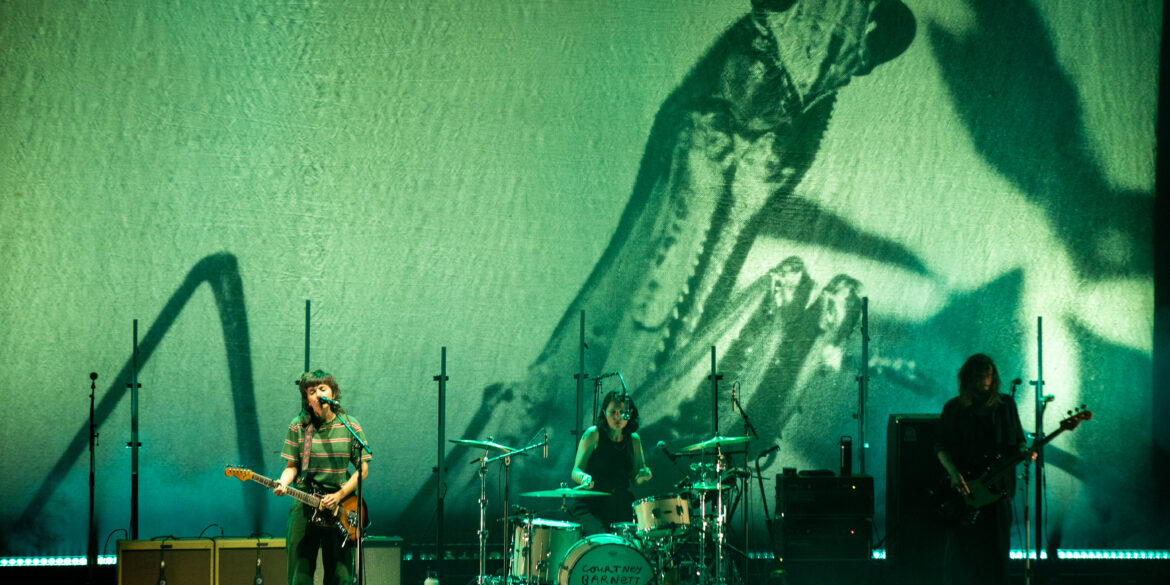

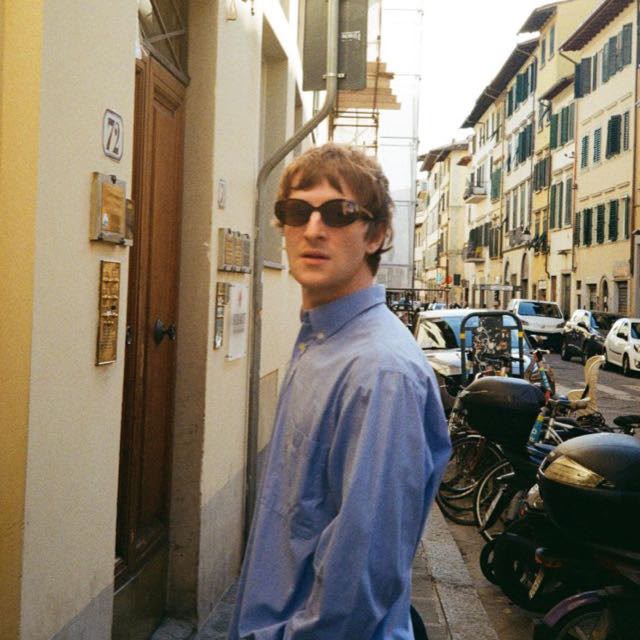
Live at New Century, Manchester on 23rd November 2026.
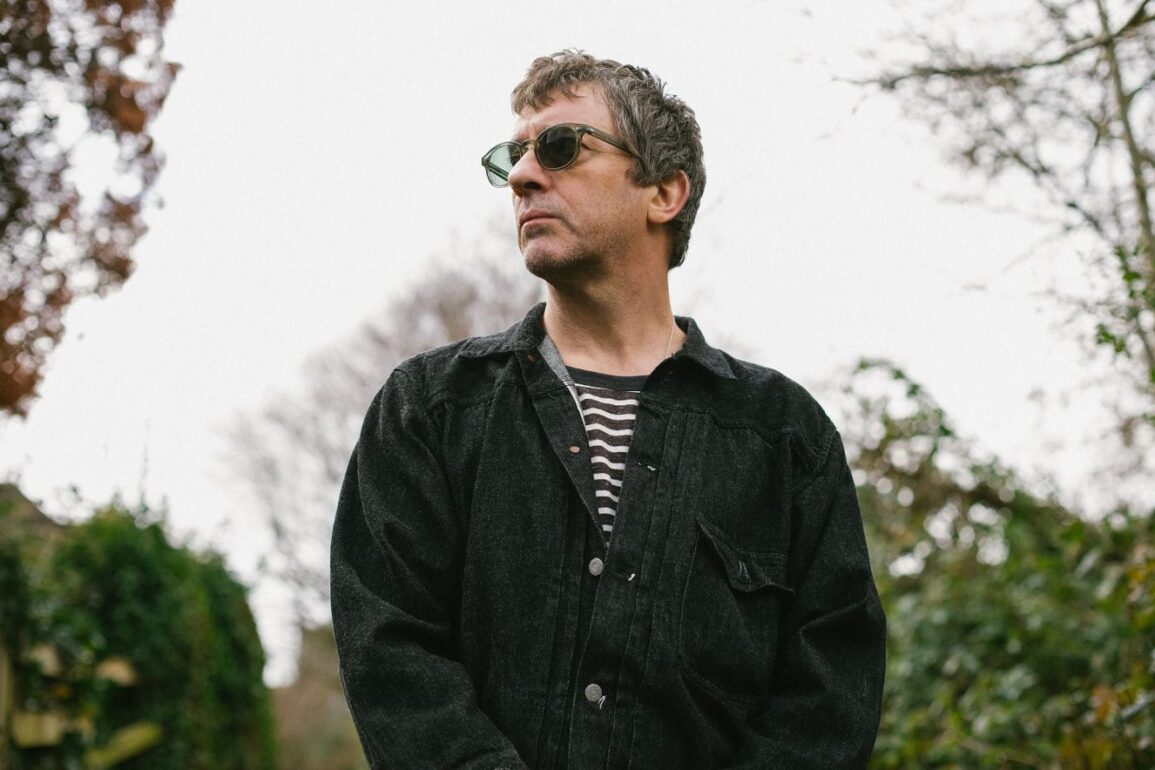
Stripping back the macho-centric, ego fanatic and sexualised influx of the 90s indie pop mainstream, Coxon continues to push up his glasses and use his vulnerabilities, and slacker-lent sensibilities to debunk the glossy facade governing most of the 90s and early 2000s with his own frantic tenderness, and nonchalant British wit.
There’s no doubt that Coxon not only embodied, but introduced many of his musical influences from, the Glaswegian Cutie scene, and later the American slacker-rock phenomenon into his already scrappy punk approach to songwriting, eventuating in the creation of his own punchy telecaster style.
As bands like Sonic Youth, Pavement, and Dinosaur Jr began to emerge across the pond during the mid 90s, Coxon, clearly a keen listener and fan, began to embrace their lo-fi production, loose musicianship, and detached or apathetic vocals – favouring the unpolished, effortless feel over studio perfection or technical showmanship. Coxon’s musical influences and shy, awkward demeanor helped craft his own sound that became definitive of the whole era.
You could say he’s the British equivalent of Stephen Malkamus, or the perfect combination of J. Mascis and Paul Weller. Coxon is a longtime fan of Pavement, after citing them as a major influence on his playing and songwriting. In an interview with Far Out Magazine, Coxon stated ten of his favourite albums of all time, which include, The Jam’s – Setting Sons, Love – Forever Changes, and Talk Talk’s – Spirit of Eden, all of which you can hear as a dominant influence on Blur, and in his own solo back catalog.
I think it’s fair to say that Coxon aligned more with the street-corner slackers and the duffle coat daydreamers of Glasgow than any of his Brit-pop contemporaries, which he coincidentally happened to be very much a part of having stumbled to the forefront of with his band, Blur. However, throughout Blur’s history, from epiphanic live performances, like their notorious 1994 Glastonbury Festival performance, and all the way through their nine studio albums, it always appeared like Coxon was on the outskirts – the quiet outsider of the group, the quiet thinker, until armed with a guitar. Unsure where the unpredictable force of his instrument may lead him at any given moment – finely walking the balance between visceral expressions and keeping within the frameworks and formulas of pop songwriting. This being said, Coxon remains true to himself by attempting to steer clear of the predictable nature and profit-orientated directions in which the music industry operates.
A perfect example of this is Blur’s sixth studio album 13, released in March 1999. Here, we see a diversion from previous records – an attempt to break free from the already caged industry expectations of the expectations of Blur. Coxon and Albarn remained true to themselves and introduced an element of emotional depth that was explored sonically through volume and textures, in a much darker and emotionally charged context. Most of the lyrics are inspired by Damon Albarn’s break-up with long-term girlfriend, Julie Frischmann, which act as a catharsis purge of grief, amplified by Coxon’ expressive unleashed guitar, swapping the jovial London-centred realism of Parklife for a more inward looking visceral introspection, opting for a vulnerableness a to fit with the feelings and sensitiveness of the time.
Critics praised 13 for its brave departure from pop sensibilities, with some calling it Blur’s most accomplished work. It’s often regarded as a pivotal moment in the band’s evolution, showcasing their artistic growth and willingness to explore new musical territories.
Although Coxon’s musical input on 13 complimented the heartfelt lyrics of Damon Albarn, stylistically, Albarn decided that this wasn’t the future for Blur. After having songs rejected by Albarn, Coxon’s manager encouraged him to release them under his own name and to continue carving out his own tracks, which eventuated in his own solo career and eight-year hiatus from Blur.
A year before the release of 13, saw Coxon finish his first solo record The Sky Is Too High, released on 10 August 1998. He wrote, recorded and produced it himself for his label, Transcopic Records. Now with nine solo studio albums under his belt, Coxon continues to carve his own way through the arbitrary madness of modern life, rejecting any sign of conformity and ease, remaining true to the predecessors of his influences.
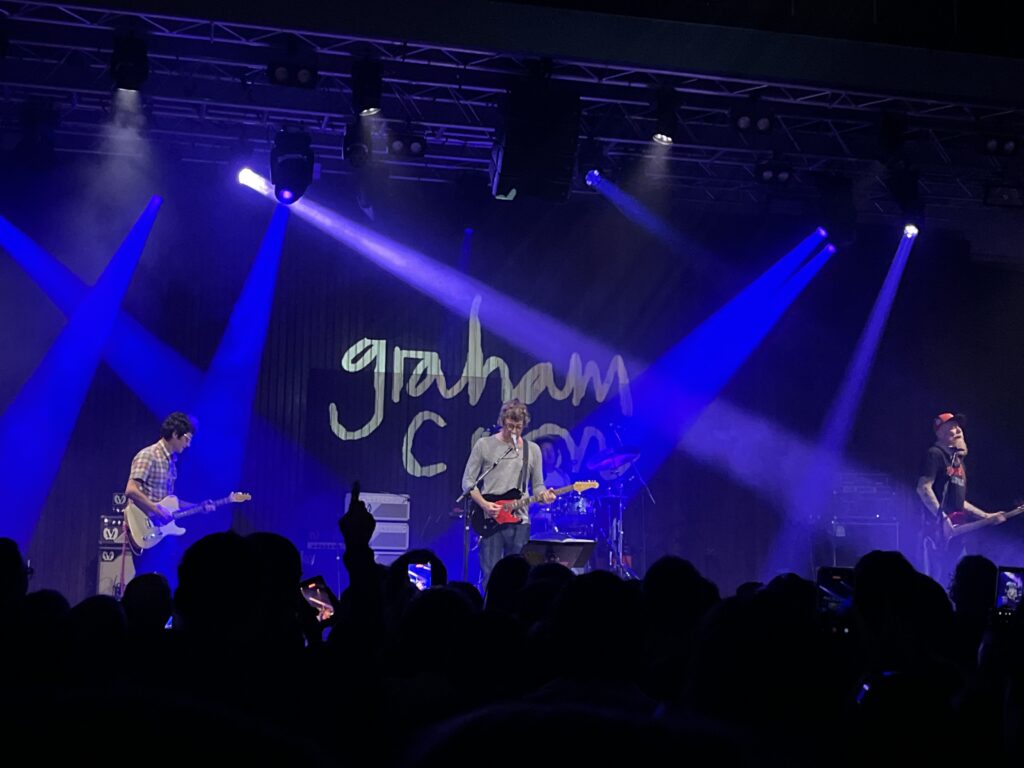
Around 8:15pm, Coxon and his band walk onto the New Century stage amidst a bellow of screams from the front row before pelting straight into the dissonance of ‘That’s All I Wanna Do’ from his debut 1998 solo record The Sky Is Too High. Singing the first eight bars on himself, Coxon bent over the abnormally low microphone stand, nonchalantly sings, “I saw you today / You were too far away / It’d hurt me to say / Hurt me to say the words / The words I have to say” portraying his signature innocence – the icon of outsider – before the band violently crash into a melodic wave of ear-splitting crunched distortion to waver across the ram shackled prose.
An unbeknown density from the low end of the band helps stabilise Coxon’s scratchy-chicken grease guitar work. The tight-nit rigorous structure of the band aids the seamless flow of the tracks, allowing a framework for Coxon’s off-cut experimentations and ensuring they don’t lead too astray. It seems, in these respects, the band acts as a musical guide, ushering Coxon’s laid-back demeanor through the structures of the tracks

As they fire through the majority of his discography, Coxon appears in good spirits as he attempts to imitate a Manchurian accent – which he even admits he’s unable to do, asking the audience what football teams they support, and what the next gigs they’re going to. All met with enthusiastic responses. Coxon explains that the performance in Edinburgh last night was cut short due to running out of time and vows this can not happen tonight.
Dedicated to ensuring the gig finishes on time, we hear Coxon blitz through his back catalog playing tracks such as, Bittersweet Bundle of Misery, I Wish, You & I, I Can’t Look At Your Skin and 2004 hit single Freakin’ Out from Happiness in Magazines. Alongside a handful of covers, featuring That’s When I Reach For My Revolver by Mission of Burma, a oddly accurate cover of Neil Young’s Cinnamon Girl, and a select number of Blur tracks, including Coffee & TV, You’re So Great and a version of Tender with a stoner-rock slacker crescendo.
As Coxon rattles through the hour-and-half set, stabbing his fingers into the fret board and causing injuries, while continuously dropping his glasses, there’s a real innocence and vulnerability to his playing, despite the depth of the chest-rattling sounds. Throughout all of his solo albums, there’s an essence that Coxon used these to retreat from the mainstream expectancies to enable him to fully experiment, without having to succumb to Albarn, and the industry bureaucrats that stood before him and his guitar. His solo albums offer a place of solace, an easel to experiment with patterns, sounds and tones. Coxon beams with happiness on stage, while armed with an arsenal of jokes and on-stage banter. It really feels like the shy Coxon we once saw on Blur press shots, stored out of the limelight and always expressionless with thick-rimmed glasses, only exists within the Blur climate. I was quite surprised at how effortlessly funny and charming he was with the crowd, and I couldn’t help but feel like he appeared more at home, and less of a cog in the music industry’s profit-orientated pursuit.
With his back catalogue long sold out and in high demand on physical formats, Coxon’s latest record, Castle Park kicks off a comprehensive reissue of Coxon’s expansive solo catalogue and comes alongside the re-release of The Sky is Too High and The Golden D, all available on 19 June. Further drops across the coming year will include the studio albums Crow Sit on Blood Tree (2001), The Kiss of Morning (2002), Happiness In Magazines (2004), Love Travels at Illegal Speeds (2006), The Spinning Top (2009), A+E (2012); as well as the two Original Songs and Score album soundtracks for The End of The F***ing World 1 (2018) and The End of The F***ing World 2 (2019); and Superstate (2021), the original soundtrack released to accompany the graphic novel of the same name.