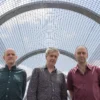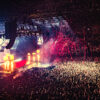

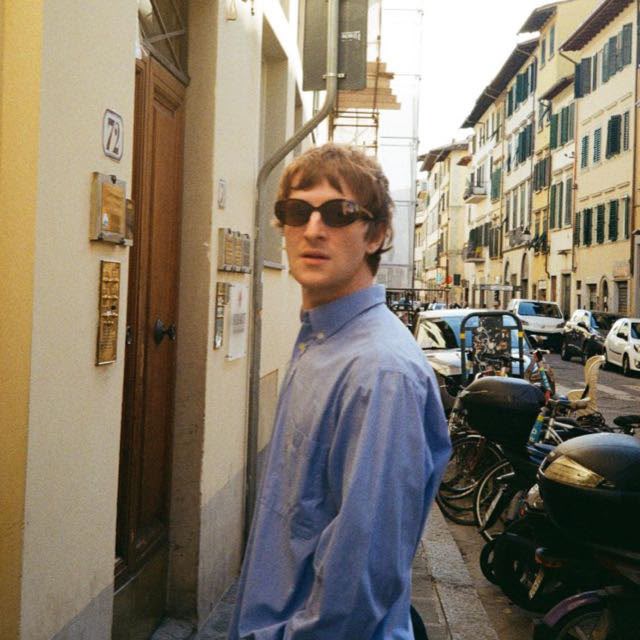
Celebrating the 35th anniversary of Adventures Beyond The Ultraworld, The Orb embarked on a sold-out three-night residency deep within Castleton’s Peak Cavern cave.
It is difficult to fully grasp just how ambitious Adventures Beyond the Ultraworld was in 1991. Not only was it a genre-defying double album, but it also served as The Orb’s first full-length commercial release, embracing an experimental and conceptual approach to songwriting that sampled, recycled and recontextualised sounds to define the euphoric, post-club ‘come down’ sensibility of Britain’s emerging ecstasy generation
Alex Paterson and Jimmy Cauty had begun exploring the “chill-out” and “come-down” experiences associated with drug-induced highs as early as 1988. In 1990, Jimmy Cauty and Bill Drummond released the pioneering, sample-driven ambient album Chill Out under The KLF banner, following the group’s evolution from The Justified Ancients of Mu Mu. The album was an ambient concept project that portrayed a mythical nocturnal journey across the U.S. Gulf Coast, beginning in Texas and ending in Louisiana. The hallucinatory soundscape blended field recordings of trains, sheep, and Tuvan throat singers with samples from artists such as Elvis Presley, Fleetwood Mac, and Van Halen.
Chill Out became an influential landmark of the emerging post-club culture in the UK, earning a devoted cult following and helping to establish ambient music as a distinct space for reflection and recovery. Against this backdrop, Adventures Beyond the Ultraworld pushed the concept even further, expanding the conceptual possibilities within ambient house, dub and experimentalism into a sprawling, immersive, and cinematic listening experience.
DJ Alex Paterson teamed up with Jimmy Cauty to form The Orb, drawing inspiration from the 1970s electronic pioneers Brian Eno, Cluster, and Kraftwerk, as well as the emerging social transformations taking place around free parties and warehouse raves. While experimenting with recreational drugs themselves, most of the material developed through live performances in the chill-out rooms of clubs to complement the post-rave experience, evoking the lingering euphoria of chemically induced highs while providing a gentle, restorative wave for the come-down tidal approach.
The result was a seamless, progressive record that segued and evoked a psychedelic journey, across Britain, drawing from a rich blend of ambient dub, sample-driven electronica, and immersive soundscapes. The Orb helped define, and inadvertently pioneer, the UK’s nascent ambient house movement, creating a work that was as much an environment to inhabit as it was an album to hear.
Where Chill Out drew upon mysticism, realism, and sparse field-recording soundscapes, Adventures Beyond the Ultraworld adopts a more lucid and overtly science-fictional approach to collective post-ecstasy introspection. From the nostalgic ambient-house anthem of the opener, Little Fluffy Clouds, to the deep dub currents of Perpetual Dawn, and ultimately toward passages of spiritual, beatless soundscapes that glue the record together. Across its sprawling 109-minute runtime, the album ebbs and flows through a series of interconnected moods and environments, drifting ever further into the cosmos.
More than three decades later, it is easy to see why the album continues to inspire such devotion. Its enduring appeal lies not only in the musical innovations, but in the collective memories and association it carries – of youth, discovery and friendship; in nostalgia of those transcendent early-morning journeys from the dancefloor into the dawn. It stands as a soundtrack to cultural artefact that documents a formative period in British history long since passed, but continues to resonate with those who lived it.
Adventures Beyond the Ultraworld remains one of the most authentic examples of “come-down” music ever recorded, perfectly encapsulating a unique moment in cultural history and the experiences that encapsulate an entire generation and state of mind.
Now, Alex Paterson and Michael Rendall celebrate the 35th years since their debut studio album with three sold out dates in Castleton’s Peak Cavern cave (or known to locals as ‘Devil’s Arse’). Nestled deep in the depths of the Hope Valley of the Peak District, an outdoor setting that is reminiscent of the free parties and raves that started their careers all those years back.
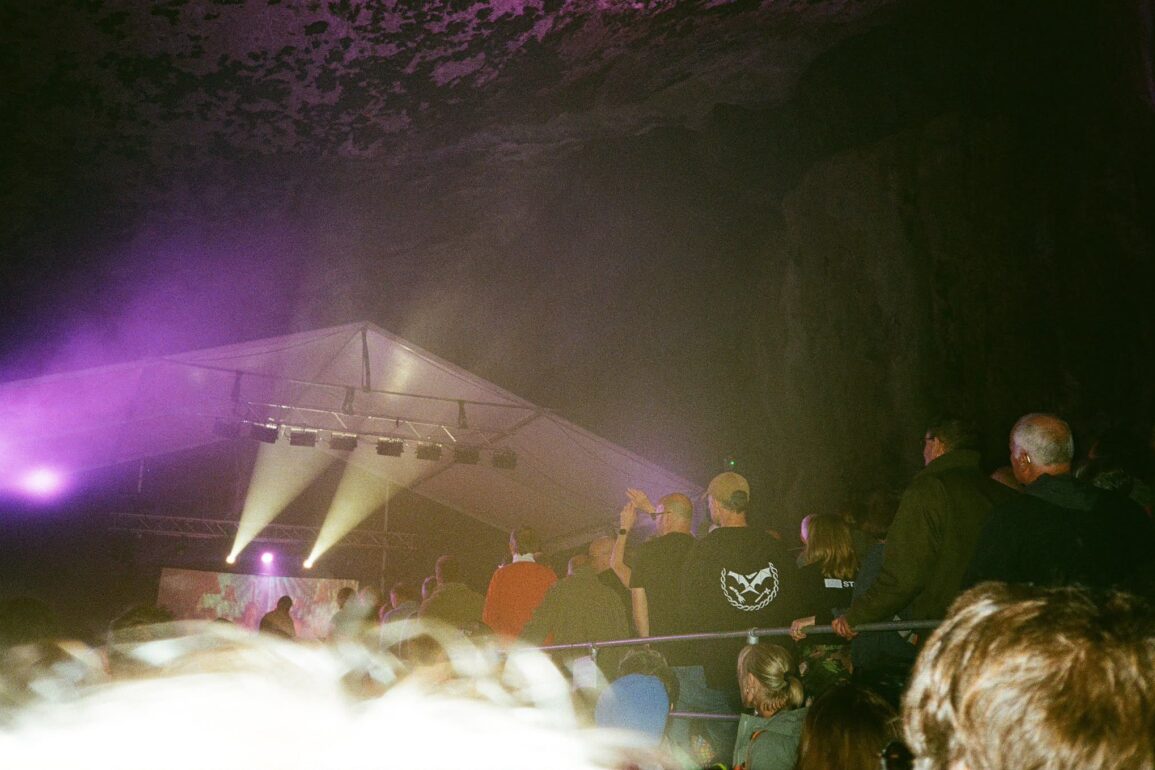
Peak Cavern, the largest natural cave in Britain, laced within a spectrum of multi-hued lights, backdrop visuals and glacier echos, The Orb flow through their back catalogue of hits in a perfectly crafted flow without stopping once.
A mixture of classics from Adventures Beyond the Ultraworld; Little Fluffy Clouds, Perpetual Dawn and A Huge Ever Growing Pulsating Brain That Rules From The Centre of The Ultraworld, was heard alongside covers of Gang of Four’s At Home He Feels Like A Tourist & Pink Floyd’s One Of These Days.
The set unfolded as a fluid fusion of ever-evolving dub rhythms and their signature ambient house textures, conjuring deep electronic grooves that kept the audience in full hypnosis throughout the seventy-five-minute voyage.
A highlight of the set was hearing Toxygene from their second studio album U.F.Orb sweeping the crowd into a frenzy from the pulsating bops and acid bounces, as every bass thump bounced from wall to wall.
Although I had initially expected to hear more cuts from Adventures Beyond the Ultraworld, I soon realised that moving from the ethereal ambience of Spanish Castles In The Sky directly into Toxygene might have been too jarring of a shift. Instead, the mix and the balance of the selected tracks kept the meandering essence of Adventures Beyond the Ultraworld alive throughout the set.
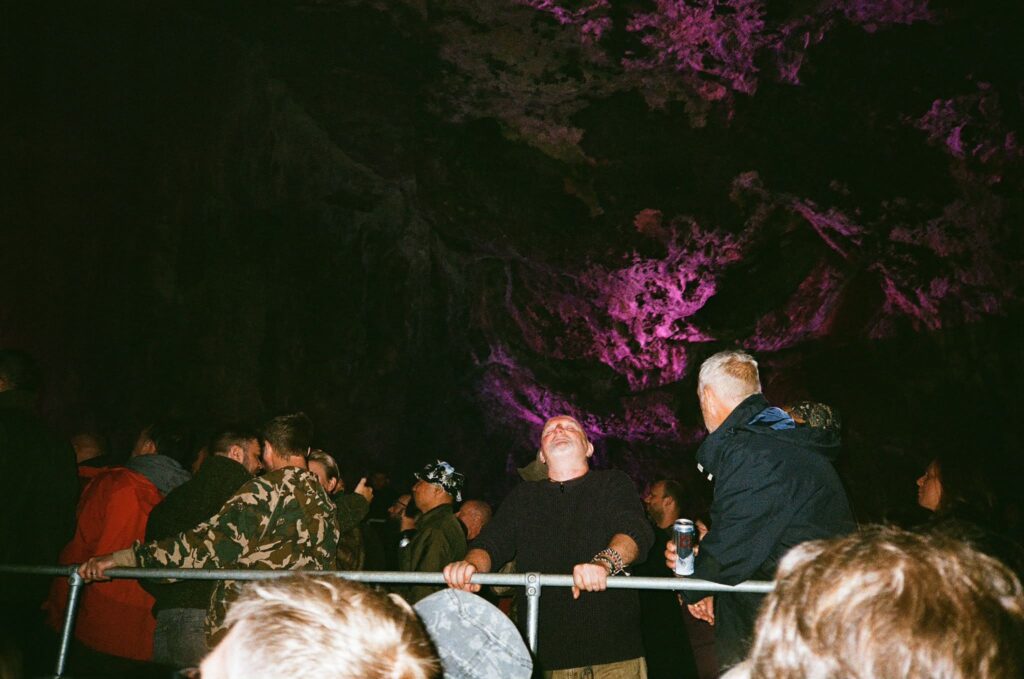
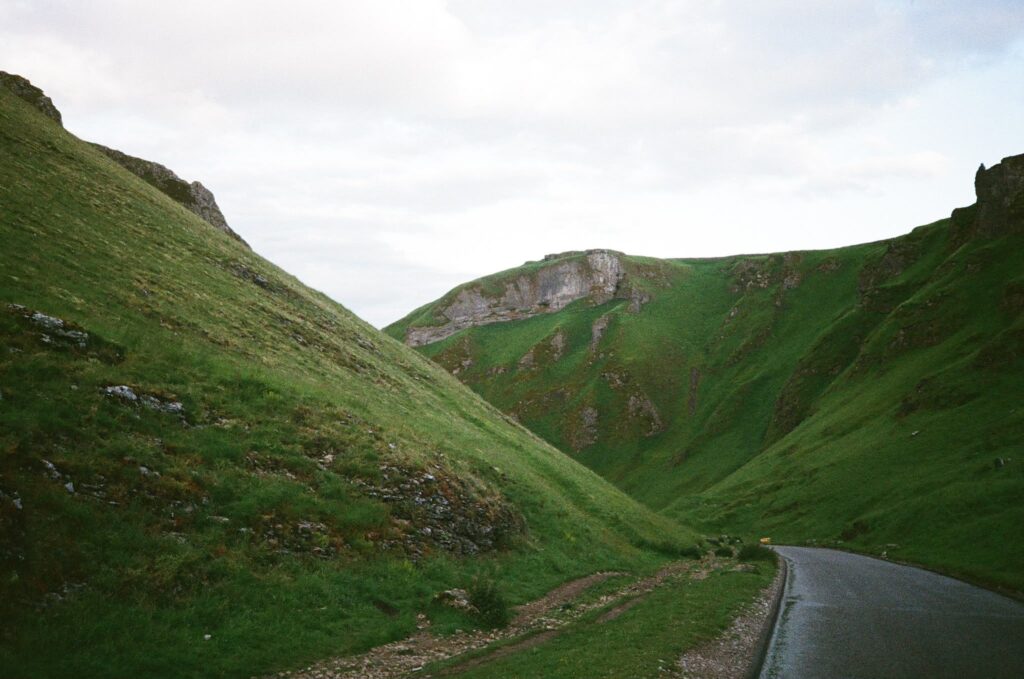
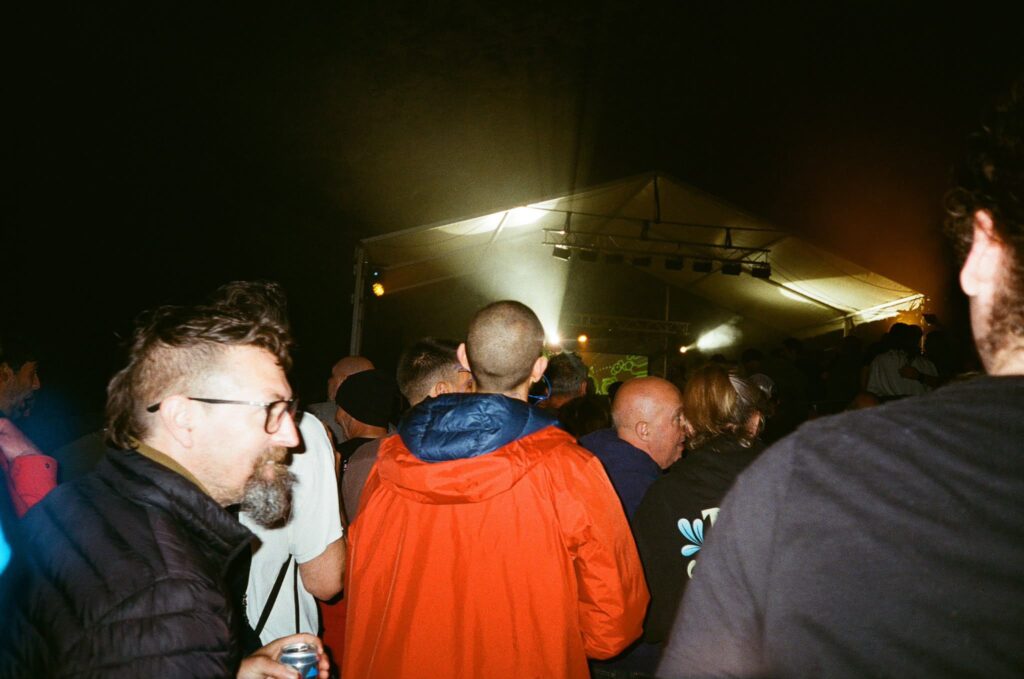
The vast limestone chamber of the Peak Cavern felt like a natural extension of The Orb’s sound – dark, atmospheric, mysterious, proving to be the perfect immersive venue to experience The Orb live.
Peak Cavern proved to be a perfect setting for The Orb’s blend of ambient house, dub and psychedelic electronica. It played an important part in the performance just as much as the music did. The combination of ancient geology and futuristic ambient house created an experience that felt simultaneously primal and otherworldly.