
There are concerts, there are performances, and then there are experiences so all-encompassing that they seem to exist outside the usual language of live music. Trying to describe a Sunn O))) show in conventional terms almost feels like missing the point. Songs become difficult to separate, applause feels almost secondary, and the familiar rhythm of verse, chorus and encore dissolves into something far stranger. On the 1st of July at Project House in Leeds, what unfolded was less a rock concert than a carefully orchestrated act of sensory immersion. Time stretched, sound became something physical, and for nearly two hours, everyone inside the venue surrendered themselves to a wall of volume unlike anything else.
That is not to say the evening abandoned musicality. Far from it. Every element, from the opening support set to the final crushing drone, was meticulously considered. Yet this was music that asked something different of its audience. Rather than inviting singalongs or encouraging movement, it demanded stillness. It asked listeners to stand, absorb and simply exist within the sound. It was hypnotic, overwhelming and, at times, genuinely transcendent.
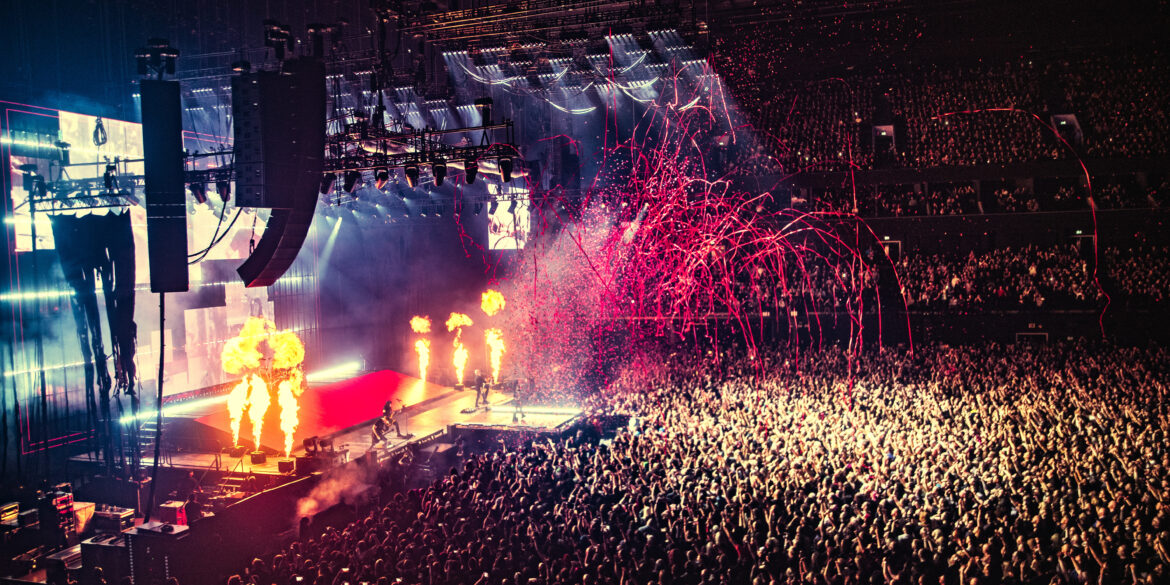
Project House proved the perfect setting. The industrial space already carries an atmosphere unlike many venues in Yorkshire. Its exposed structure and cavernous proportions lend themselves to ambitious performances, and as people filtered through its doors, there was a quiet sense of anticipation rather than the usual pre-gig chatter. Fans spoke in hushed voices, merchandise queues moved steadily, and there was a noticeable absence of the boisterous excitement that often accompanies rock shows. Everyone seemed aware they were about to witness something unconventional.
Black Mountain opened the evening with a performance that, while considerably more restrained than what longtime fans may have expected, complemented the atmosphere beautifully. The Canadian outfit have built their reputation on expansive psychedelic rock, rich with layers of distortion, progressive flourishes and towering crescendos. Here, however, they opted for something more understated.
It was a fascinating decision.
Rather than attempting to overwhelm the audience before Sunn O))) emerged, Black Mountain seemed content to establish the emotional landscape. Their guitars shimmered rather than roared, rhythms unfolded patiently, and the spaces between notes became almost as important as the notes themselves. The result was a set that felt deeply meditative, inviting the audience to slow their breathing and settle into the environment.
The stripped-back nature of the performance highlighted the band’s songwriting in unexpected ways. Without relying on relentless sonic weight, melodies floated gently around Project House, while warm analogue textures filled the venue with an almost dreamlike quality. It was the musical equivalent of twilight, gently preparing the room for the darkness that would soon descend.
The audience responded with quiet admiration. There were no huge reactions or explosive moments, but that hardly mattered. Black Mountain understood the assignment perfectly. Their role was not to steal attention but to prepare the space, and by the time they left the stage, the room seemed collectively recalibrated.
As technicians moved equipment into place, anticipation quietly intensified.
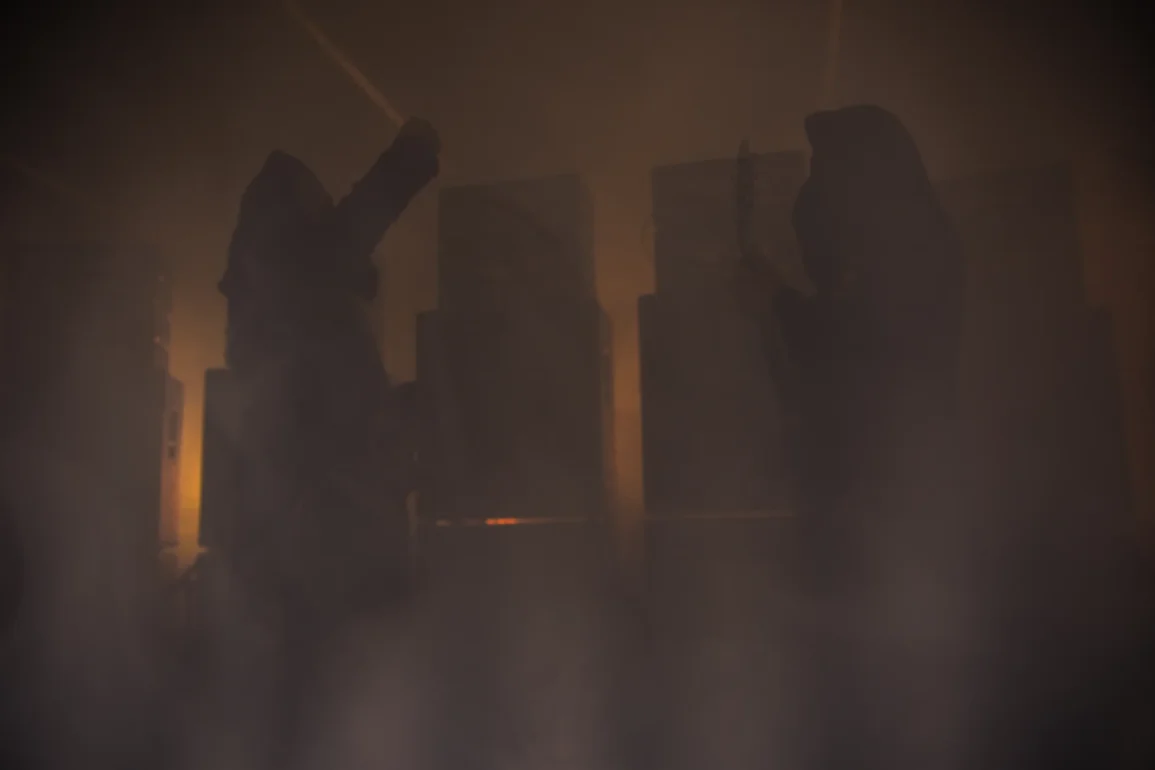
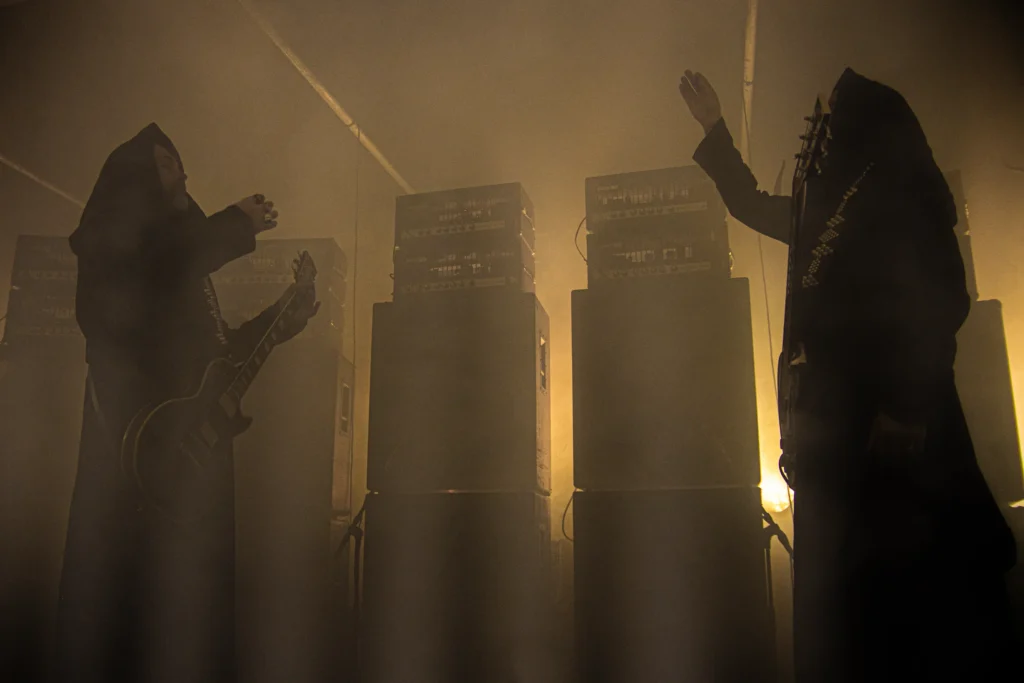
The amplifiers lining the stage looked almost architectural, towering behind banks of speakers with an imposing presence before a single note had been played. Robed figures occasionally appeared through the shadows as final preparations were made, disappearing again into darkness without ceremony. Every detail contributed to the growing feeling that this would not follow the conventions of a typical concert.
Then the lights disappeared entirely.
Slowly, impossibly slowly, thick fog began pouring across the stage.
At first it drifted gently around the amplifiers before spreading across the floor, gradually swallowing every visible object. Within minutes, the stage had vanished altogether. Then the audience disappeared too. Looking around the room became strangely disorientating as faces dissolved into silhouettes before disappearing entirely beneath the dense blanket of smoke.
Miley Stevens for At The Barrier – Sunn O)))
When the first note finally arrived, it was almost impossible to identify where it came from.
It did not begin so much as emerge.
A single sustained tone rolled across the room with immense patience, vibrating through the floor before pressing against the chest with startling physical force. It was less something you heard than something your body instinctively recognised. Every frequency seemed carefully calibrated to resonate through bone and muscle alike.
Then another joined it.
Then another.
Layer upon layer accumulated until Project House itself appeared to hum.
Describing Sunn O))) as performing songs feels almost misleading. The evening unfolded as one vast, continuously evolving composition. Individual passages rose and fell, textures shifted, feedback bloomed and receded, but there was never a clear sense of beginning or ending. I genuinely could not tell you whether I heard four pieces or forty. The distinctions simply ceased to matter.
Instead, the performance became about immersion.
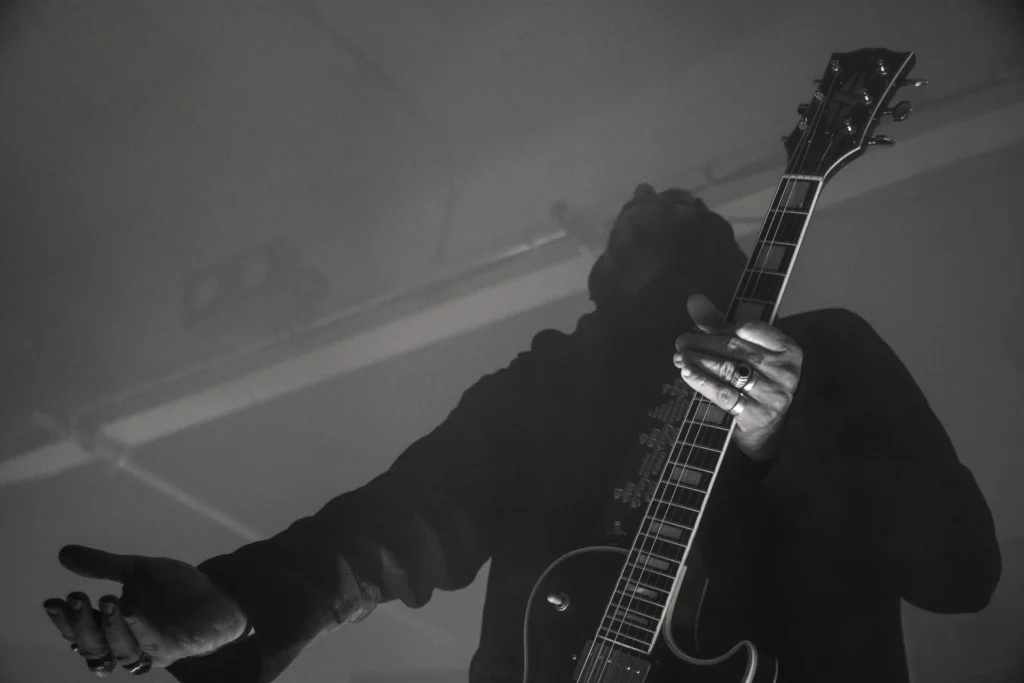
The famous robes worn by Stephen O’Malley and Greg Anderson occasionally emerged through the fog, illuminated for mere seconds by blinding white lights before disappearing once again into complete obscurity. At times they resembled monks conducting an ancient ritual more than musicians standing on a stage. Their movements were minimal, almost ceremonial, allowing the sheer magnitude of the sound to become the central focus.
The lighting design deserves enormous praise.
Rather than dazzling the audience with elaborate visuals, it operated almost as another instrument. Stark beams of white pierced through impossible volumes of smoke, creating cathedral-like columns that seemed to stretch endlessly upward. Every flash briefly revealed fragments of the performance before plunging everything back into darkness.
Combined with the overwhelming density of the fog, the effect was astonishing.
Normal visual references disappeared completely. Depth became impossible to judge. It often felt as though the venue itself had dissolved, leaving only sound and light suspended somewhere beyond ordinary space.
The physical impact of Sunn O)))’s music has been written about countless times, but no description truly prepares you for experiencing it firsthand.
The low frequencies refused to remain confined to the speakers.
They travelled through the floor, climbed the walls and settled deep within your body. Your chest vibrated continuously. Clothing rippled almost imperceptibly. Even breathing seemed to synchronise with the movement of the drones surrounding you.
It bordered on the spiritual.
There were moments where I caught myself forgetting entirely that I was standing in a concert venue in Leeds. The outside world simply ceased to exist. Phones remained largely lowered. Conversations vanished. Even applause felt strangely unnecessary between movements because interrupting the atmosphere would almost have broken the spell.
Everyone stood together in near silence, united by something difficult to explain.
There is often a temptation to describe music like Sunn O)))’s as oppressive or intimidating. Certainly, it is extraordinarily loud, and there were moments where the sheer weight of the sound bordered on overwhelming. Yet there was also remarkable beauty hidden within the distortion.
Beneath the immense drones were subtle harmonic shifts that slowly revealed themselves to patient listeners. Tiny changes in tone altered the emotional landscape completely. What initially sounded monolithic gradually became surprisingly delicate, full of movement and nuance beneath the surface.
It rewarded complete attention.
Miley Stevens for At The Barrier – Sunn O)))
Every sustained chord seemed to contain dozens of smaller details waiting to emerge, encouraging listeners to lose themselves within each vibration rather than anticipate whatever came next.
Perhaps that is why time became so difficult to measure.
Without conventional song structures, familiar landmarks disappeared. Minutes felt like seconds before suddenly expanding into something much longer. Entire passages drifted past with dreamlike fluidity until eventually I realised I had completely stopped wondering how long the performance had been going.
I was simply inside it.
That may ultimately be Sunn O)))’s greatest achievement.
In an age where attention is constantly fragmented, where audiences instinctively reach for phones between songs and concerts are increasingly viewed through screens, they create an environment that almost forces complete presence. There is nowhere else to direct your attention because every sense is already occupied. The sound commands your hearing, the lights consume your vision, the vibrations occupy your body, while the fog strips away almost every external distraction.
Few bands achieve that level of immersion.
Fewer still sustain it for an entire evening.
As the final drones slowly dissolved into silence, the transition felt almost shocking. The absence of sound arrived as something tangible, leaving ears ringing and bodies instinctively waiting for another wave that never came. The fog remained hanging in the air as the lights gently lifted, gradually revealing faces that looked equal parts stunned and exhilarated.
Only then did applause finally break the silence.
It was heartfelt but somehow secondary, almost inadequate after what had just unfolded.
Walking back out into the warm Leeds evening, everything felt strangely heightened. Ordinary city sounds suddenly seemed distant and insignificant after spending so long inside Sunn O)))’s immense sonic landscape. Conversations among departing audience members were noticeably quieter than usual, many smiling without quite knowing how to articulate what they had experienced.
Perhaps that is inevitable.
Some performances can be summarised through standout songs, memorable solos or spectacular stage production. This was not one of them. Attempting to reduce Sunn O))) to a setlist would completely miss the essence of the evening because the performance was never about individual compositions. It was about surrendering yourself to atmosphere, volume and sensation.
Black Mountain provided the perfect introduction, exercising remarkable restraint to gently guide the audience towards the meditative state that would define the rest of the evening. Their beautifully understated performance demonstrated confidence and understanding, setting the emotional foundations without ever competing for attention.
Sunn O))) then took those foundations and constructed something extraordinary upon them.
It was immersive without gimmickry, theatrical without excess and overwhelmingly powerful without ever sacrificing artistry. More than anything else, it challenged every expectation of what a live performance can be. This was not entertainment in the traditional sense. It was closer to installation art, religious ceremony and sonic meditation all occupying the same space.
Long after leaving Project House, the drones seemed to linger somewhere in the back of my mind, like echoes refusing to disappear. Some gigs leave you humming a chorus on the walk home. Others leave you replaying a favourite solo. This one left something far stranger.
It left silence feeling different.
And perhaps that is the highest compliment a band like Sunn O))) could ever receive.