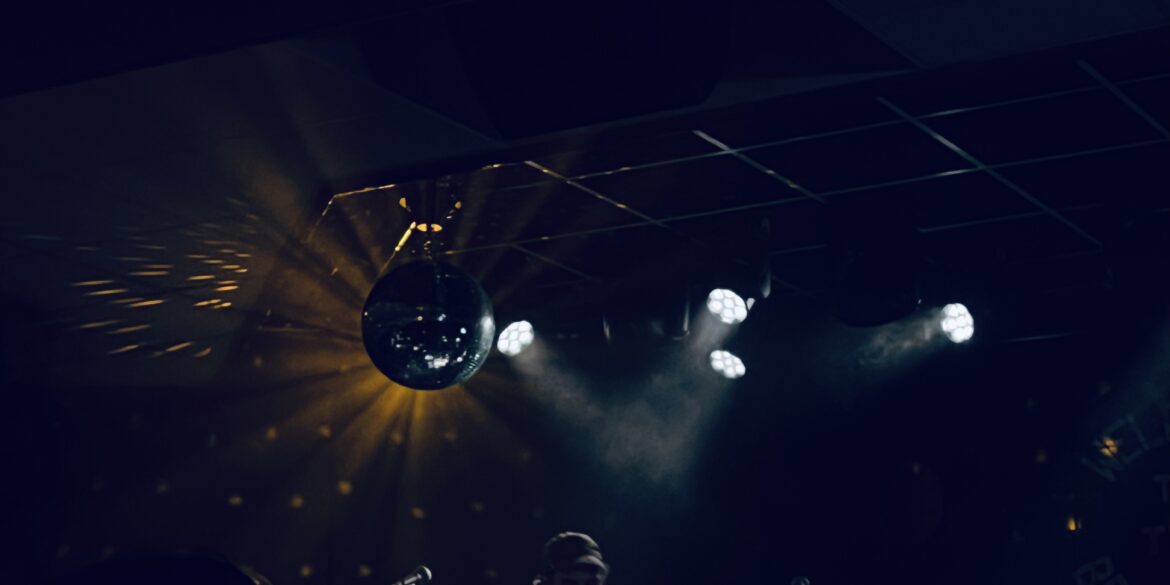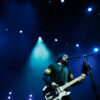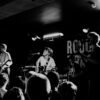
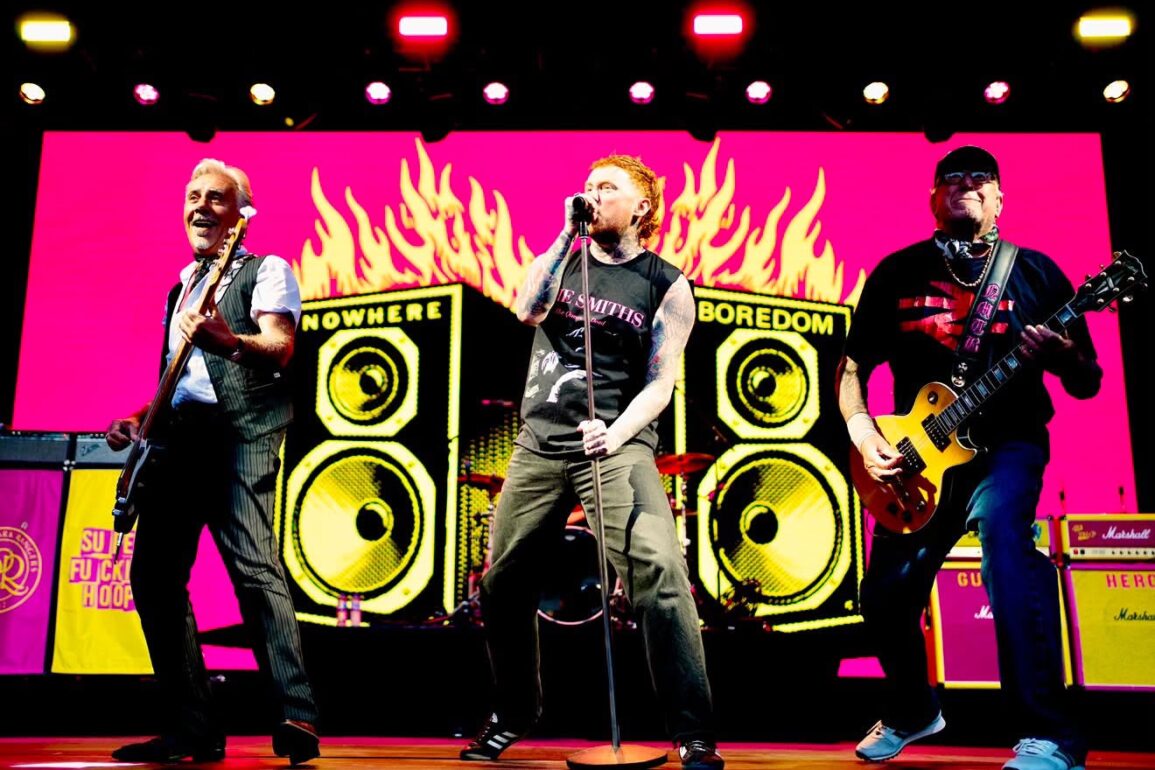
Celebrating 50 years since their infamous performance at Manchester’s Lesser Free Trade Hall in 1976, Sex Pistols returned to the city on Sunday 12th July for a landmark show at Castlefield Bowl. Original members Steve Jones, Paul Cook and Glen Matlock were joined once again by guest vocalist Frank Carter, alongside Belfast punk legends Stiff Little Fingers, The Undertones and Salford’s own poet laureate of punk, Dr. John Cooper Clarke.
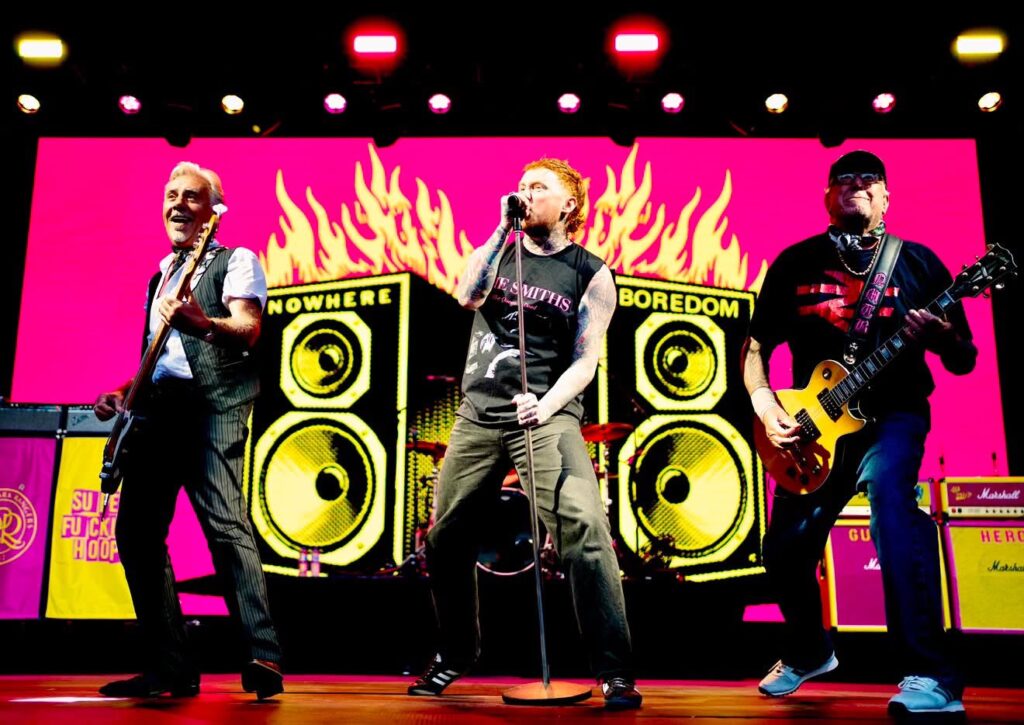
Photograph by Hels Millington
In 2024, the Pistols, Jones, Cook and Matlock reunited for a pair of charity concerts at London’s Bush Hall with Frank Carter stepping in on vocals following John Lydon’s absence. Carter immediately earned widespread praise for bringing a raw intensity and fearless stage presence that compared him to a younger Johnny Rotten, while never attempting to imitate him. The overwhelming success of those performances sparked a series of UK tours and festival appearances, culminating in this symbolic return to Manchester, the city where the Sex Pistols famously inspired an entire generation of musicians half a century ago.
On 4 June and 20 July 1976, the Sex Pistols performed two concerts at Lesser Free Trade Hall, organised by Pete Shelley, who had formed the Buzzcocks in February that year after witnessing the Sex Pistols perform. Among the audience were future members of Joy Division, New Order, The Smiths, The Fall, Simply Red, Magazine, and Buzzcocks, who cited the performances as being the primary inspiration of their musical careers. Other attendees included Martin Hannett, Tony Wilson and Alan McGee, who cited the gig as inspiring their launch of influential independent record labels such as Factory and Creation Records.
Growing up in a small mining village on the outskirts of Barnsley, I found myself sitting for hours rummaging through my dad’s CD collection. I’d retreat into my bedroom with a handful of albums, poring over the artwork, reading every lyric and absorbing everything I could about the bands behind the music. There were a handful of albums that really did open my eyes and resonate with me at that time, one being The Specials self-titled debut album, and the other was The Sex Pistols’ 1977 debut album ‘Never Mind The Bollocks, Here’s The Sex Pistols’. Both albums challenged convention and had something important to say.
‘Never Mind The Bollocks, Here’s The Sex Pistols’ was like a slap right in the face. It was like a wake-up call, out of the daydream of adolescence and providing a hand into the real. The bright abrasive collage artwork by Jamie Reid stood illuminating on the shelf like radiation, with the statement ‘here we are’ stamped right across the front made everything else seem stale. The name ‘Sex Pistols’. ‘Bollocks’ in the title. The frantic energy, clever sneering lyrics and the wall of sound guitars, lending the rock n roll style of guitars and tearing through a completely new world that I never knew existed.
After wearing out ‘Never Mind the Bollocks’ to death, I set out on a mission to find albums that captured the same raw power. I searched for records with the same relentless energy, breakneck pace and uncompromising, “question everything” attitude that made the Sex Pistols’ debut feel so revolutionary. Leading me to eagerly scour the NME every week, disappear down online forum rabbit holes and spend hours flicking through the punk section at HMV, looking for anything that might scratch the same itch.
What I found was far more than another great album — I discovered punk as an entire movement. It became the soundtrack to my formative years, shaping not only my musical taste but also the way I viewed the world. Through its lyrics, politics and unapologetic honesty, punk taught me lessons about life, history and society that no textbook ever could. It encouraged curiosity, challenged authority and instilled the belief that it’s always worth asking why.
One band that kept cropping up throughout this period, whether in the pages of NME or through their increasingly legendary appearances at Leeds Festival, was Gallows. They possessed that same electrifying intensity that had first drawn me to the Sex Pistols, while their charismatic frontman, Frank Carter, carried an unmistakable swagger and stage presence that drew inevitable comparisons to Johnny Rotten. Fierce, confrontational and utterly uncompromising, Gallows felt like a modern torchbearer for the spirit of British punk in the mainstream.
Frontman Frank Carter possessed an almost unholy mystique. Perched on the crowd barrier, held aloft by the audience, he’d command the chaos like a preacher addressing his congregation. With little more than a gesture, he could summon enormous circle pits, sending thousands of people charging around festival fields and spilling beyond the confines of the tent. He looked like some unhinged disciple of Moses, part punk frontman, part tattooed cult leader, effortlessly directing the movement of the masses wherever he pleased. Watching him wasn’t just witnessing a gig, it was witnessing someone with an extraordinary ability to connect with, and completely control, a crowd.
And now, those two worlds collide. Standing here with my dad, watching the band that first ignited my obsession with punk fronted by the man who carried that same spirit into a new generation, it feels like a full-circle moment. It’s a moment drenched in nostalgia, recollecting endless adolescent hours spent searching high and low for that elusive sound, rifling through CD racks, car boot sales, devouring music magazines and disappearing down internet rabbit holes in pursuit of the next great discovery. Back then, punk felt like a hidden world waiting to be uncovered.
Providing the perfect backdrop for the 50th anniversary of the legendary Lesser Free Trade Hall performance, Castlefield Bowl, hidden amongst a tangle of canals and overlooked by soaring tramlines and railway bridges on the edge of Manchester city centre, felt like the ideal back alleyway setting to encounter the Sex Pistols. Bathed in glorious sunshine, its terraced amphitheatre was packed with diehard punk devotees, all eagerly awaiting a celebration of one of the most influential moments in British music history.
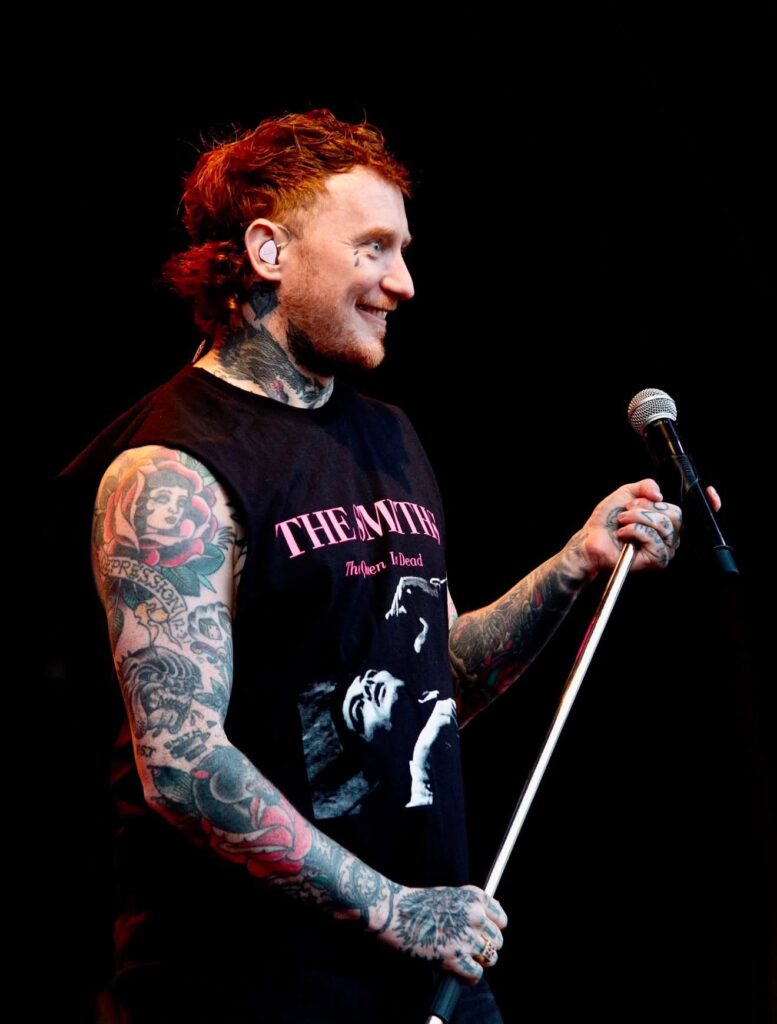
Photograph by Hels Millington
Stiff Little Fingers delivered a blistering set that stood as a reminder of why they remain one of punk’s most respected live bands. Jake Burns’ may have lost his signature growl from the first few albums, but his vocals were as passionate, delivering the politically charged messages that remain ever so more relevant to this day. Opening their set with the classic Tin Soldiers and Nobody’s Hero from their second album ‘Nobody’s Hero’ before charging through their classics including Alternative Ulster, Suspect Device, At The Edge, Wasted Life, and a cover of The Specials ‘Doesn’t Make It Alright’. Every song carried the same urgency and social relevance that made them as groundbreaking all those decades ago. The sea of SLF T-shirts responded with relentless enthusiasm, pogo’in, and pouring their hear out to every word from start to finish.
As the sun disappeared behind Manchester’s skyline, the anticipation that had been building all day finally exploded when Frank Carter and original members Steve Jones, Paul Cook and Glen Matlock charged onto the Castlefield Bowl stage with the unmistakable bass thumps, opening ‘Holidays in the Sun’, instantly igniting the crowd. Behind them, a collage of archival footage and vintage Sex Pistols performances flashed across the giant screens, seamlessly intertwining the band’s turbulent past with its vibrant present and sending the audience into a frenzy.
Wearing a ‘Queen Is Dead’ vest and telling the crowd that Manchester was his favourite city in the world, Frank Carter immediately forged a connection with the audience. From there, he exploded into life, charging relentlessly from one side of the stage to the other, microphone stand in hand, embodying the unpredictable energy that has defined his own career.
Before the show, I was skeptical. I wondered how the diehard Sex Pistols faithful would respond to a much younger vocalist from a different generation stepping into such an iconic role, and whether anyone could truly live up to the legendary stage presence of Johnny Rotten. Within moments, those doubts disappeared. Frank Carter isn’t simply a replacement—he is the only person who could make this work. Rather than attempting to imitate John Lydon, Carter brought his own infectious intensity, charisma and controlled chaos to the performance. He understood that the songs didn’t need recreating; they needed reigniting. He wasn’t trying to replace an icon, but instead embracing the spirit of the music and making it unmistakably his own.
Classics such as Pretty Vacant, Bodies, God Save the Queen and EMI were bellowed across Manchester, disappearing into the low cloud of smoke that had descended from the Dovestone fires on the moors. Yet the highlight of the performance for me came with Sid Vicious’ sneering, chaotic rendition of Frank Sinatra’s My Way, recorded for the 1978 film The Great Rock ’n’ Roll Swindle.
As the opening chords rang out, Glen Matlock and Steve Jones took a seat on the drum riser, as Carter bellowed out the classic opening lines. It was a moment that perfectly captured the essence of punk: a crowd of people with arms around each other, united by their love of individuality, rebellion and the courage to stand apart. An anthem for the misfits, the outsiders and anyone who ever chose to carve their own path through life, regardless of the criticism they may have faced along the way.
As ‘My Way’ drew to a close, Steve Jones and co rang into the Pistols’ debut single ‘Anarchy In The UK’ sounding as defiant and exhilarating as ever. The Jamie Reid Queen collage stood as a backdrop throughout the whole track as the song sounded as defiant and exhilarating as ever. Steve Jones’ unmistakable guitar tone, Paul Cook’s driving rhythms and Glen Matlock’s melodic bass lines provided the authentic backbone, while Carter’s explosive delivery ensured the music felt current rather than nostalgic. Every chorus echoed around the Bowl, with thousands of voices united in celebration of punk’s enduring spirit.
The evening was a reminder that punk has never been about perfection, it has always been about honesty, rebellion and connection. Stiff Little Fingers brought heart, conviction and timeless songwriting, while the Sex Pistols delivered a triumphant, high-energy finale that left Castlefield Bowl shaking. Fifty years after punk first challenged the establishment, this was proof that its message, music and attitude still resonate just as powerfully.