
‘You were there, weren’t you?’
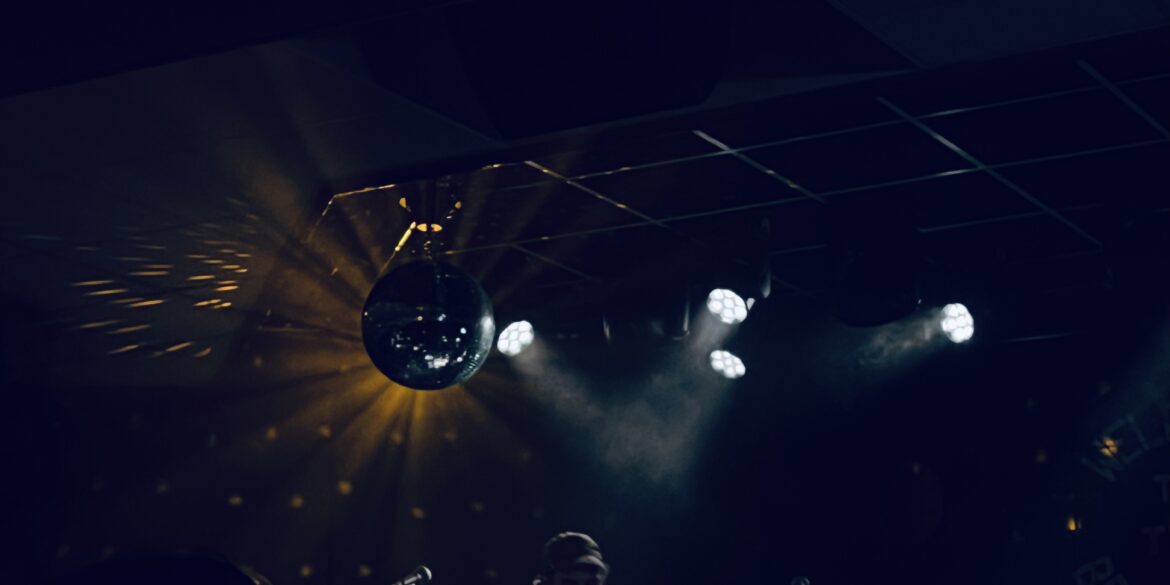
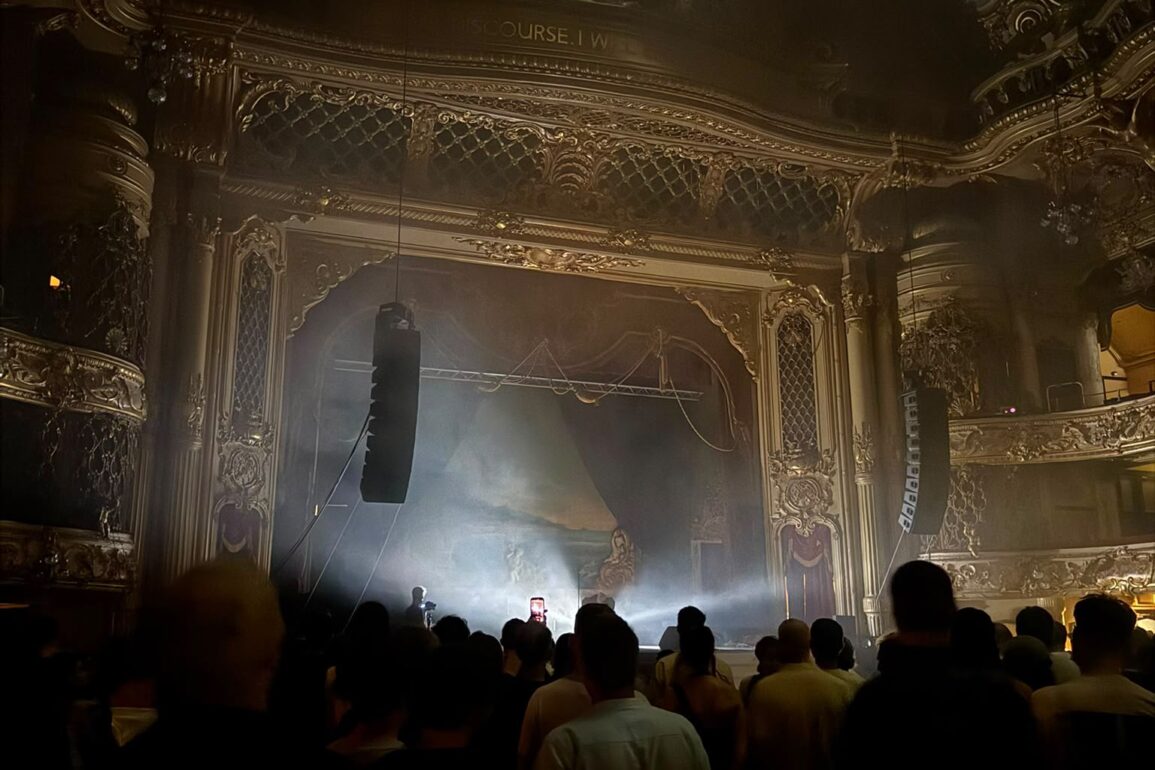
James Leyland Kirby (The Caretaker) and his long-time collaborator, artist Ivan Seal, sit quietly in two fireside chairs within Blackpool’s historic Tower Ballroom for The White Hotel’s latest incarnation, Black Lights Festival. As the room fills with a deafening crackle of ageing vinyl and fractured ballroom melodies recolour the venue, the pair remain motionless, suspended within a deep nostalgic mesmerism that longs for an already forgotten past, slipping further beyond recall. The Tower Ballroom, host to Strictly Come Dancing, became both an archive and apparition. Dancing with spectres. Waltzing towards nowhere.
The Caretaker, renowned for his explorations of memory, its gradual deterioration, nostalgia, and melancholy, fully digressed into the conversations surrounding hauntology to their fullest expression in ‘You were there, weren’t you?’. A full spectral multidisciplinary immersive experience, where you, the audience played as much as a part in reconciling the memory that never quite existed. By returning the ballroom’s 1930s British tea-room dance music to its intended environment – only to fracture it with the persistent crackle of deteriorating vinyl, obliterating noise sections and intense strobes, the performance transformed familiarity into unease, casting a Lynchian sense of dread over the space and onto the audience.
For more than two decades, James Leyland Kirby has been exploring the fragile architecture of memory through decaying loops of pre-war ballroom recordings, gradually obscured beneath layers of vinyl crackle and format erosion under the alias, The Caretaker. Named from Kubrick’s The Shining and the role that Jack Torrance is condemned to forever play in the timeless Overlook hotel, The Caretaker’s work has become synonymous with hauntology – the persistence of lost futures and the spectral return of the past, where nostalgia is never comforting, but unsettling; a reminder that memory is always fragmentary and in the process of disappearing. Mark Fisher explored these theories in his cultural analysis ‘Ghosts of My Life’. He wrote, “those who can’t remember the past are condemned to have it resold to them forever.“
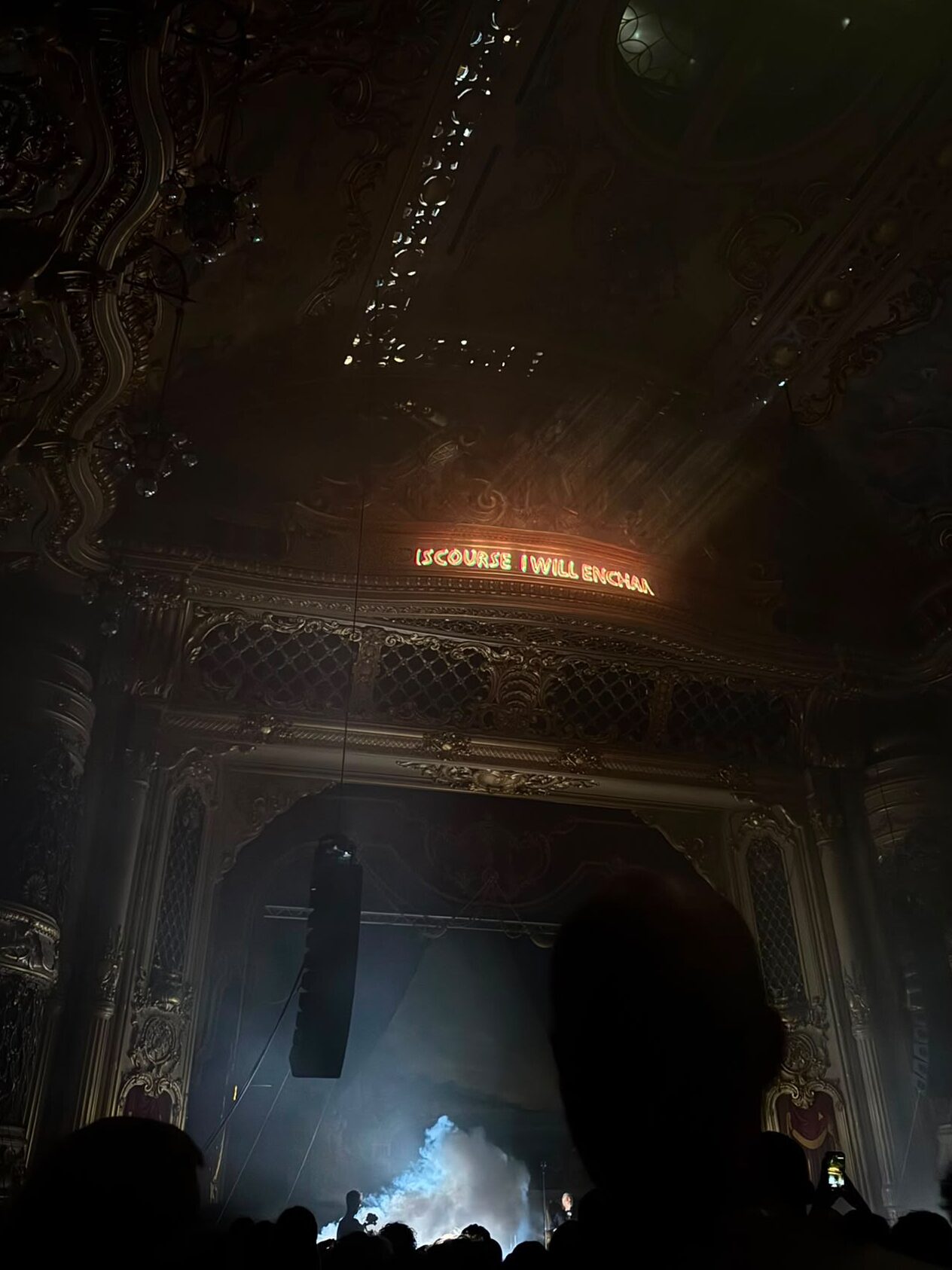
Together with long-time collaborator Ivan Seal, whose paintings similarly inhabit states of distortion, ambiguity, and recollection, The Caretaker graces Blackpool’s historic Tower Ballroom for the opening ceremony of Black Lights Festival. Curated by The White Hotel, the festival brings together a weekend of time-bending contemporary artists to transform these historic landmarks into a new collective impetus of memory and dream.
Two ballroom dancers emerge from either side of the stage to take one another’s hand and begin slowly gliding across the dance-floor, as James Leyland Kirkby stands at the forefront of the stage, still with a dynamic microphone lip syncing the vocals of the haunting swing of a bygone era. The ballrooms facade slowly washes away to reveal the truth. As The Caretaker’s perverse disparity of time and place marry so elegantly whatever state you wish to experience it. If the world became entirely mechanical, and a directive was forged to replicate music, it would probably be similar to these experiences.
The performance extended beyond music or theatre, into a fully immersive, multidisciplinary environment. Setting, sound, dancers, architecture, and audience dissolved into one another, collapsing the distance between observer and participant. A hopelessly hopeful abyss.
In The Caretaker’s 2005 release Persistent Repetition of Phrases, Leyland Kirby combines an overt interest in amnesia and memory distortion, with a more melodic piano-centred focus. The simulation of Alzheimer’s disease has been a topic of conversation with The Caretakers since his use of sampled works. How it captures the spirit of the first half of the 20th century in reflection. There is light in these sampled records, but all the colour they once had is dulled – it is slowly being drained by the act of remembering. The memory itself is a mere representation, in the same way that the music, through all of Leyland Kirby’s effects and analog crackles, has become a mere representation of a memory that never existed which we all somehow feel nostalgic to.
These British tea-room pop records that Leyland Kirby has unearthed have been immortalised in the format of vinyl, now can be found in many of the bargain bins in charity shops across the country. The preservation and decontextualisation of these forgotten records adds the decaying memories themselves – the hissing, static and popping of the dust on the records, compliments the memorable passages, but also comments further on slow decay of those times. For how long will it be until those memories will no longer be of existence? Will those tracks in record format become artefacts for a generational study of a time we no longer remember?
Alongside the live performance of ‘You were there, weren’t you’, Ivan Seal presented ‘Your Guests Never Mentioned Me’ an immersive B&B takeover exclusive for the Black Lights Festival weekend with paintings that hovered between memory and decay, married with looping audio by James Leyland Kirby (The Caretaker). Souvenirs, loss, repetition. A hotel that remembered you incorrectly.
Kali Malone, Mica Levi, Space Africa, Blackhaine, Lee Gamble and many more artists came together for Black Lights first incarnation at Lancashires most favoured seaside town Blackpool, a town that has spent generations making the impossible visible. Three days of music, cinema, theatre, art and beautiful confusion. Three days of dreaming with your eyes open. Three days in a town that has always known the truth: sometimes the brightest lights are the ones you find the dark.